
Is AI Recruiting Worth It for Your Hiring Team?
Explore the benefits of AI recruiting for hiring teams, including speed, cost savings, and quality improvements with Adway's platform.

Is AI Recruiting Worth It for Your Hiring Team?
AI recruiting delivers measurable value through faster hiring cycles, reduced costs, and improved candidate quality. Organizations using AI-powered recruitment automation report up to 30% faster time-to-hire while maintaining compliance with federal employment discrimination laws through built-in bias mitigation tools. The technology particularly excels at reaching passive candidates through programmatic social advertising, with documented cases showing 300%+ application increases.
TLDR
• AI recruiting reduces time-to-hire by up to 30% through automated screening and scheduling, cutting days from the hiring process
• Organizations achieve 300-500% ROI within the first year by lowering cost-per-hire and improving retention rates
• Social recruiting technology reaches 4.9 billion users across platforms, accessing passive talent not found on traditional job boards
• Compliance frameworks like the four-fifths rule help ensure AI tools meet EEOC guidelines for fair hiring practices
• Case studies show real results: Nexer Recruit achieved 381% application increase and 24% faster hiring using Adway's platform
Why Everyone Is Asking If AI Recruiting Is Worth It in 2026
Talent acquisition leaders are under intense pressure. CEOs want growth targets met, hiring budgets are flat or shrinking, and the talent market remains fiercely competitive. In this environment, AI recruiting has emerged as the fastest-growing solution for teams trying to do more with less.
But what exactly is AI recruiting? At its core, it refers to the use of technology, particularly machine learning and automation, to streamline the talent acquisition process. This includes everything from programmatic job advertising and resume screening to interview scheduling and candidate engagement. According to IBM, 99% of hiring managers now report using AI in some form during hiring.
Adoption among recruiting teams is accelerating. LinkedIn's Future of Recruiting research shows that 37% of organizations are now actively integrating or experimenting with generative AI tools, up from 27% a year ago. This rapid uptake reflects a growing consensus: AI recruiting delivers measurable payoffs in speed, savings, and quality of hire.
Adway, recognized as a Core Leader in the 2025 Fosway 9-Grid for Talent Attraction & Engagement, exemplifies this shift. The platform automates programmatic job advertising across social channels, helping employers reach passive talent and convert them through mobile-first application journeys.
The evidence suggests that AI recruiting is not just a trend but a strategic imperative. The sections that follow break down the specific benefits, ROI calculations, compliance considerations, and integration steps your team needs to make an informed decision.
What Benefits Can AI Recruiting Deliver in 2026?
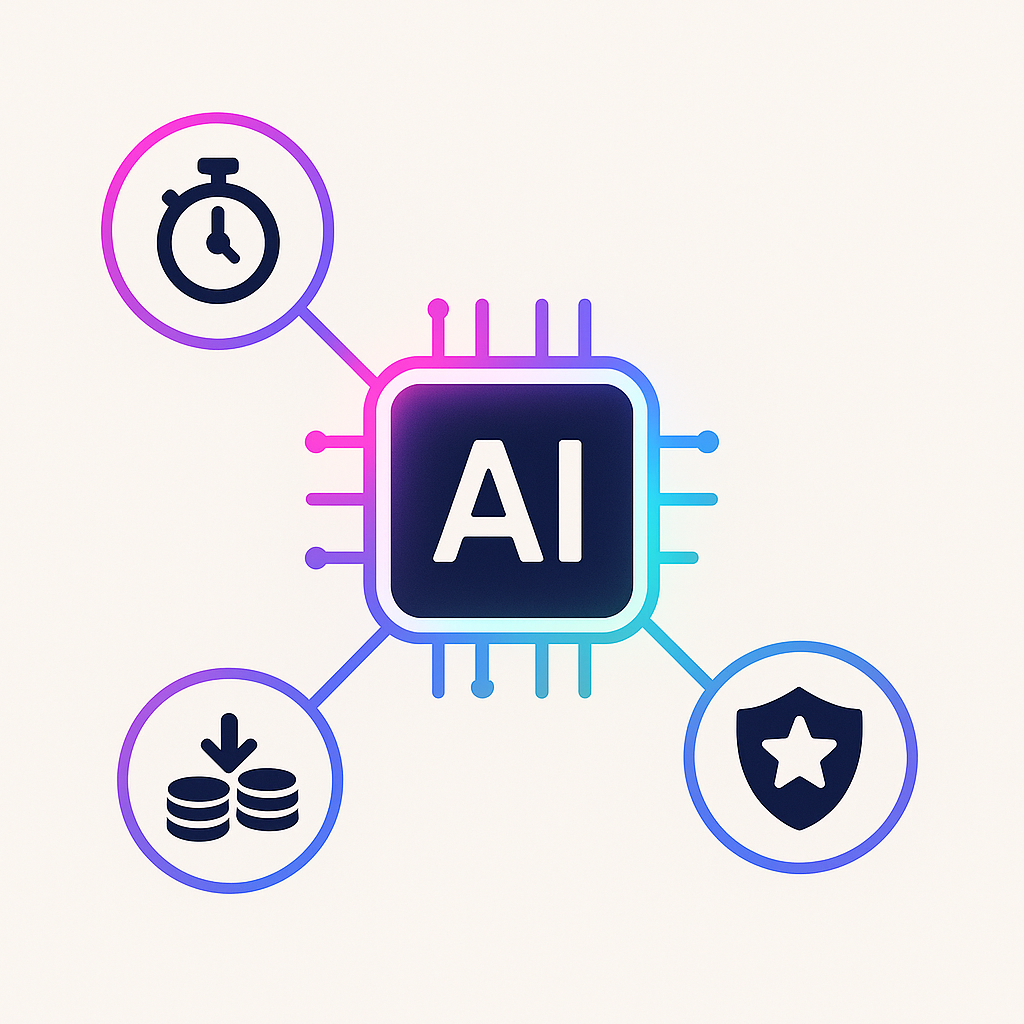
AI recruiting promises efficiency, but the real question for TA leaders is: what do the numbers actually show? The data points to gains across three critical dimensions: speed, cost, and quality.
Speed: Faster Time-to-Hire
Recruitment automation can significantly reduce time to hire. Automated screening filters resumes in minutes, scheduling tools eliminate email back-and-forth, and updates for candidates and internal hiring teams are sent instantly. Companies that use automation for sourcing, interview scheduling, and screening report, on average, up to 30% faster time-to-hire metrics.
For example, Nexer Recruit, a Swedish IT recruitment firm using Adway's platform, saw its time to hire shortened by 24%, measured conservatively.
Cost: Lower Spend Per Hire
Cost per hire puts dollars on your efficiency. AI-powered automation cuts these costs hard by reducing reliance on recruitment agencies and freeing recruiters from manual resume screening. According to Bain & Company, organizations can save an average of 15% to 20% in HR labor time through AI automation and augmentation.
Quality: Better Hires, Not Just Faster Ones
Quality of hire is notoriously difficult to measure, but automation is proving its value here, too. By focusing on key metrics like time-to-hire, cost-per-hire, and retention, organizations can achieve 300-500% ROI within a year, enhancing hiring efficiency and reducing turnover.
Key Takeaway: AI recruiting delivers a triple benefit: faster hires, lower costs, and improved quality, with documented ROI in the hundreds of percent within the first year.
How Does Social Recruiting Technology Reach Passive Talent?
Traditional job boards are crowded and expensive, and they miss a critical segment: passive candidates who aren't actively searching. Social recruiting technology solves this problem by meeting candidates where they already spend their time.
Approximately 23% of the US workforce are not on LinkedIn but have other social footprints. With 4.9 billion people on social media, spending an average of 2.5 hours daily, platforms like Facebook, Instagram, and TikTok represent untapped talent pools. As Adway puts it: "Your next great hire isn't scouring job boards. They're on social media, just like 4.9 billion others."
Programmatic job advertising, powered by AI, dynamically places job ads across these channels. Advanced algorithms, automated bidding, and AI-driven precision placement improve targeting, ensuring ads reach qualified, pre-engaged candidates you won't find sitting in CV databases. Adway's platform automates and enhances this entire process, boosting quality of hire and proving ROI.
The result? Employers can engage passive candidates before they begin active job searches, building sustainable talent pools through multi-platform social media activation.
Case Proof: Nexer Recruit's 381% Application Lift
Nexer Recruit, a Swedish recruitment firm specializing in IT and tech talent, partnered with Adway to leverage a data-driven approach to recruitment marketing. The results speak for themselves:
381% increase in applications through automated recruitment marketing
1 out of 3 tech applications now sourced via Adway
24% reduction in time to hire (measured conservatively)
According to Nexer Recruit, this collaboration allowed them to "reach candidates effectively via social media" and "stay attuned to candidate engagement trends," highlighting the efficiency and control gained through a data-driven recruitment strategy.
How Do You Calculate AI Recruiting ROI?
Proving the business case for AI recruiting requires a clear KPI framework. According to Gartner, 72% of HR executives are under pressure to show hiring tech payback within 12 months. Here's how to structure your ROI analysis:
Core KPIs for AI Recruiting ROI:
| KPI | Definition | Why It Matters |
|---|---|---|
| Cost per Applicant | Total campaign spend ÷ number of applicants | Measures sourcing efficiency |
| Time-to-Hire | Days from application to offer acceptance | Tracks speed gains |
| Quality of Hire | Performance, fit, and retention of new hires | Proves better hires, not just faster |
| Source of Hire | Which channels produce the best hires | Optimizes budget allocation |
| Pipeline Velocity | Speed from first touch to interview | Identifies bottlenecks |
| Retention Rate | Percentage of hires who stay | Validates long-term value |
Companies tracking all six metrics achieve 43% faster hiring and 32% lower turnover than those that don't, according to Gartner's Future of Work Trends Report.
Benchmarks to Know:
HR functions spend $401 per employee annually on recruiting, on average, making it the top HR spending area.
Up to 40% of job advertising spending is wasted, suggesting significant potential for optimization through programmatic methods.
More than four out of five TA teams (82%) already use recruiting analytics to guide strategy.
Key Takeaway: Start with a baseline for each KPI before launch, then measure the delta after deployment. The evidence shows that organizations tracking these metrics rigorously achieve dramatically better outcomes.
How Do You Keep AI Recruiting Fair and Compliant?
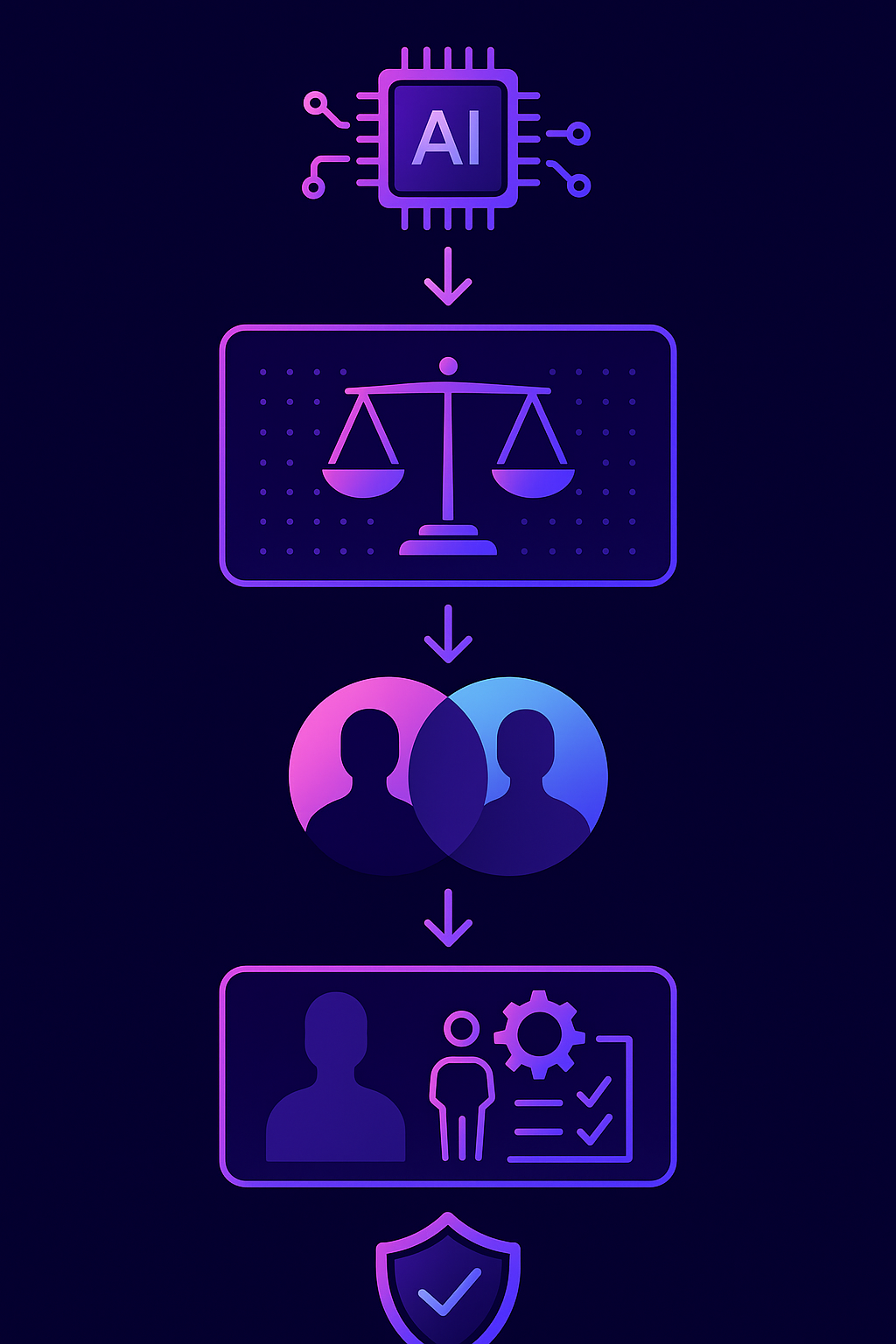
AI recruiting offers efficiency, but it also introduces regulatory and ethical risks. The EEOC's 2025 guidance makes clear that employers are responsible for ensuring their use of algorithmic decision-making tools is job-related and consistent with business necessity, even if those tools are developed by external vendors.
Key Compliance Frameworks:
Four-Fifths Rule: A general rule of thumb for determining whether the selection rate for one group is substantially different than the selection rate of another group. Employers should assess whether their AI tools cause a selection rate for individuals in a protected group that is substantially less than the rate for others.
Statistical Parity: Best-practice AI hiring systems aim for statistical parity within ±5% across demographic groups.
Protected Characteristics Masking: Responsible AI tools remove or mask protected characteristics (name, gender, age, address, proxies) during initial screening.
Bias Mitigation Tools:
Open-source toolkits like IBM's AI Fairness 360 offer more than 70 metrics for assessing fairness and provide algorithms to mitigate bias in datasets and models. Key metrics include:
Statistical Parity Difference
Equal Opportunity Difference
Average Odds Difference
Human-in-the-Loop Design:
Responsible AI recruiting systems require human review before any final decisions are made. Audit logs should be maintained for all algorithmic decisions to facilitate retrospective bias analysis.
Key Takeaway: The EEOC encourages ongoing self-analysis. Employers should conduct regular audits to determine whether their AI tools have a disproportionately large negative effect on any protected group.
How Do You Integrate AI Recruiting with Your ATS?
Seamless integration with your existing applicant tracking system (ATS) is essential for AI recruiting to deliver value. Without it, you risk data silos, manual workarounds, and lost candidates.
Why Integration Matters:
Most modern ATS platforms offer webhook functionality or a robust API for integrations. A unified ATS API enables developers and product managers to access recruiting data from multiple ATS platforms through a single, standardized interface, supporting major platforms like Greenhouse, Lever, and Workable.
Step-by-Step Integration Roadmap:
Define your nurturing strategy: Identify the various stages a candidate goes through from application to offer, and for each stage, determine the desired touchpoints.
Identify ATS triggers: Pinpoint the specific events or status changes within your ATS that will act as triggers for your automation scenarios.
Configure ATS for integration: Most modern ATS platforms offer webhook functionality or a robust API for integrations.
Build personalized content: The effectiveness of your automated nurturing hinges on the quality and personalization of your content.
Implement sophisticated logic: Robust automation requires a plan for when things go wrong.
Test thoroughly: Thorough testing is non-negotiable before deploying any automation.
Monitor and optimize: Track campaign effectiveness from first click to hire.
Integration Benefits:
LinkedIn's Recruiter System Connect (RSC) integration, for example, allows recruiters to save up to 3.5 hours a week by accessing real-time candidate details without switching platforms.
Adway's platform is built for plug-and-play ATS integration, with pre-built integrations and API connectors that allow campaign leads and candidate flows to be injected straight into existing applicant tracking systems with minimal disruption.
Looking Ahead: AI Agents, Skills Gaps & Strategic Workforce Planning
AI recruiting is not a static technology. The next wave, agentic AI, is already reshaping how organizations think about talent acquisition and workforce planning.
McKinsey's research projects that by 2030, about $2.9 trillion of economic value could be unlocked in the United States through AI-powered automation, contingent on organizations redesigning workflows and preparing their workforce.
The implications for recruiting are significant. Gen AI could automate up to 27% of work hours in Europe by 2030, while the global shortage of skilled workers is projected to reach more than 85 million by 2030.
Strategic workforce planning (SWP) is becoming essential. S&P 500 companies that excel at maximizing their return on talent generate an astonishing 300% more revenue per employee compared with the median firm.
The demand for AI fluency, the ability to use and manage AI tools, has grown sevenfold in two years. For TA leaders, this means investing in both AI recruiting tools and the skills to manage them is no longer optional.
Final Verdict: Is AI Recruiting Worth It?
The evidence is clear: AI recruiting delivers measurable gains in speed, cost, and quality of hire. Organizations that adopt data-driven, AI-powered recruitment strategies are outperforming those that rely on traditional methods.
Consider Nexer Recruit's experience: a 381% increase in applications, one-third of tech hires sourced via Adway, and a 24% reduction in time to hire. These results are not outliers; they reflect the broader trend toward automation and programmatic advertising in talent acquisition.
For hiring teams facing CEO-driven growth targets and stagnant budgets, AI recruiting offers a path forward. The key is to:
Start with clear KPIs and baseline metrics
Choose a platform with seamless ATS integration
Build compliance and bias mitigation into your process from day one
Continuously monitor and optimize performance
If your team is ready to explore AI-driven social recruiting, Adway's platform offers a transparent, consumption-based pricing model, high-volume candidate attraction at scale, and recognition as a Core Leader in the 2025 Fosway 9-Grid for Talent Acquisition. The question is no longer whether AI recruiting is worth it, but how quickly your team can get started.
Frequently Asked Questions
What is AI recruiting?
AI recruiting involves using technology, particularly machine learning and automation, to streamline the talent acquisition process, including job advertising, resume screening, and candidate engagement.
How does AI recruiting improve hiring speed?
AI recruiting reduces time-to-hire by automating resume screening, interview scheduling, and candidate updates, leading to up to 30% faster hiring processes.
What cost benefits does AI recruiting offer?
AI recruiting lowers cost per hire by reducing reliance on recruitment agencies and manual processes, saving organizations 15% to 20% in HR labor time.
How does Adway's platform enhance social recruiting?
Adway automates programmatic job advertising across social channels, reaching passive talent and converting them through mobile-first application journeys, improving quality of hire.
What compliance considerations are there for AI recruiting?
Employers must ensure AI tools are job-related and consistent with business necessity, using frameworks like the Four-Fifths Rule and statistical parity to mitigate bias.
How can AI recruiting be integrated with existing ATS systems?
AI recruiting can be integrated with ATS systems using APIs and webhooks, allowing seamless data flow and reducing manual workarounds, as demonstrated by Adway's plug-and-play integrations.
Sources
- https://www.ibm.com/think/topics/recruitment-automation
- https://www.eeoc.gov
- https://www.robinsonbradshaw.com/assets/htmldocuments/Select%20Issues%20Assessing%20Adverse%20Impact%20in%20Software%20Algorithms%20and%20Artificial%20Intelligence%20Used%20in%20Employment%20Selection%20Procedures%20Under%20Title%20VII%20of%20the%20Civil%20Rights%20Act%20of%201964.pdf
- https://business.linkedin.com/talent-solutions/resources/future-of-recruiting
- https://www.fosway.com
- https://adway.ai
- https://www.bain.com/insights/better-faster-leaner-reinventing-hr-with-generative-ai/
- https://cadienttalent.com/roi-of-applicant-tracking-system/
- https://pages.analyticssearch.com/social-sourcing-guide
- https://adway.ai/why-use-social-recruiting-technology
- https://www.gartner.com/en/human-resources/topics/hr-budget-benchmarks
- https://info.recruitics.com/blog/programmatic-job-advertising-and-recruitment-metrics
- https://www.jobvite.com/blog/prove-recruitment-marketing-roi-essential-kpis-for-ta-teams/
- https://quality.arc42.org/requirements/hiring-algorithm-bias-mitigation
- https://aif360.res.ibm.com/
- https://4spotconsulting.com/transform-your-ats-7-steps-to-automated-candidate-nurturing-with-make-com/
- https://business.linkedin.com/talent-solutions/linkedin-hiring-integrations/ats-integrations
- https://www.mckinsey.com/mgi/our-research/agents-robots-and-us-skill-partnerships-in-the-age-of-ai
- https://www.mckinsey.com/~/media/mckinsey/business%20functions/people%20and%20organizational%20performance/our%20insights/hr%20monitor%202025/hr-monitor-2025.pdf
- https://www.mckinsey.com/capabilities/people-and-organizational-performance/our-insights/the-critical-role-of-strategic-workforce-planning-in-the-age-of-ai