
How to Use AI in Hiring Without Bias in 2026
Discover how to implement AI in hiring without bias, ensuring fairness and compliance while improving candidate quality and diversity.
How to Use AI in Hiring Without Bias
AI hiring systems can reduce bias through structured audits, diverse training data, and human oversight. Organizations implementing bias audits at regular intervals and maintaining human-in-the-loop checkpoints see improved fairness outcomes. The key is treating AI as a decision support tool rather than an automated decision-maker, while monitoring selection rates across demographic groups.
TLDR
• AI recruitment tools require quarterly bias audits and continuous monitoring to ensure consistent performance across demographic groups
• The four-fifths rule provides a practical threshold for identifying disparate impact in algorithmic selection processes
• Unfair bias or discrimination risks exist at all stages of AI-powered recruitment: sourcing, screening, interviewing, and selection
• Human-in-the-loop design ensures AI recommendations inform rather than replace recruiter judgment
• Social recruiting through platforms like Adway expands candidate pools beyond traditional networks, with clients reporting 36% improvement in quality of hire
• Compliance with regulations like the Equality Act 2010 and EEOC guidance requires documented evidence of bias testing from AI vendors
With nearly 90% of companies now using some form of AI in hiring, talent acquisition teams face a critical question: how do you harness efficiency gains without amplifying discrimination? This guide walks you through eight practical steps to eliminate bias from your AI recruitment workflow, from auditing training data to measuring fairness outcomes.
Why Does Bias-Free AI Matter in Today's Hiring?
AI adoption in recruitment has moved from experimental to essential. Algorithms now help organizations source candidates, screen resumes, schedule interviews, and rank applicants. Yet this speed comes with responsibility.
Unbiased AI means systems that treat candidates equally regardless of gender, ethnicity, age, or other protected characteristics. The goal is not just legal compliance but genuine fairness: ensuring qualified people get a fair shot at every role.
75% of TA leaders say candidate quality is their top priority. Responsible AI recruitment protects that priority by widening access to talent instead of narrowing it through hidden algorithmic patterns. Adway, for example, was named a Core Leader in the 2026 Fosway 9-Grid for Talent Acquisition, reflecting how market leaders are embedding fairness into their systems from the ground up.
Key takeaway: When AI hiring tools are designed and monitored for fairness, organizations gain both better candidates and stronger legal standing.
Where Can Bias Creep In Across the AI Recruitment Pipeline?
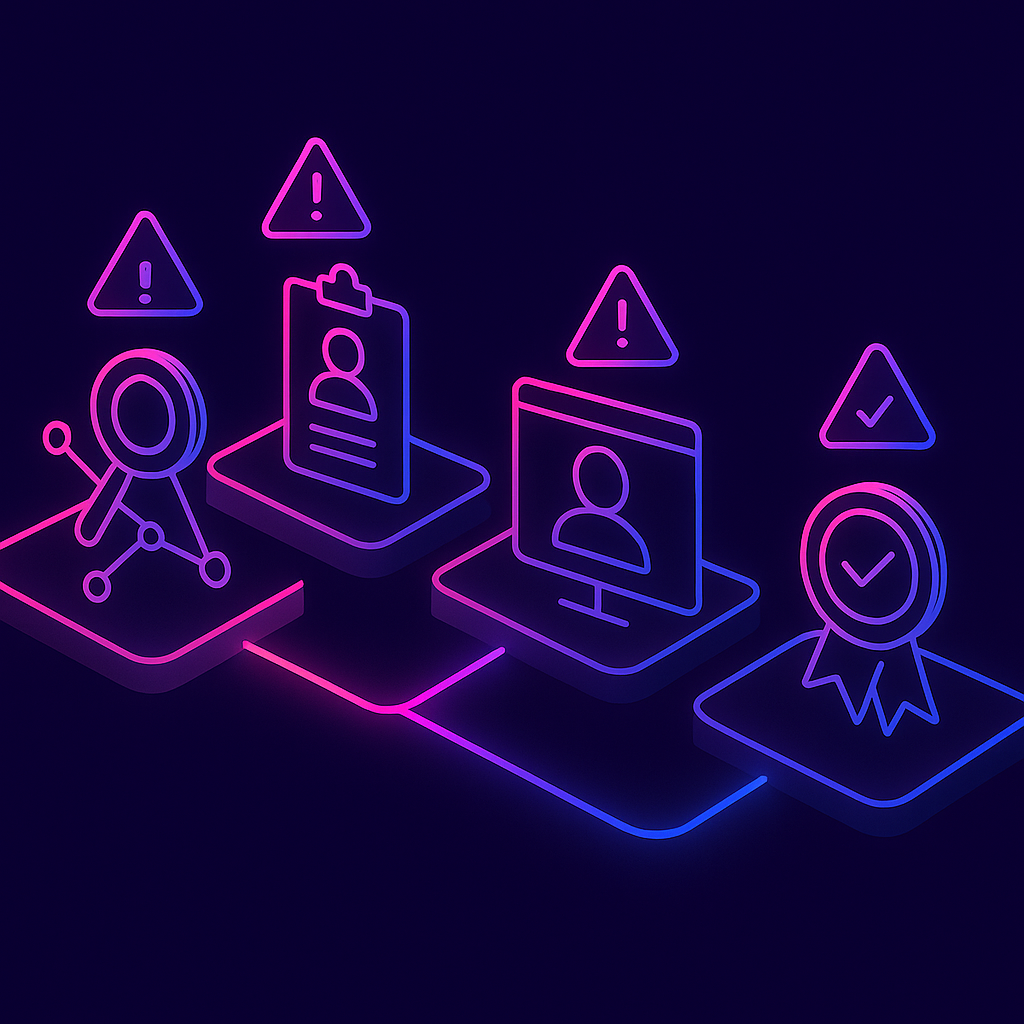
Bias can enter at every stage of the hiring journey. Understanding these risk points is the first step toward mitigation.
| Stage | Common Bias Risks |
|---|---|
| Sourcing | Targeting algorithms may favor demographics overrepresented in historical ad engagement data |
| Screening | Resume parsers trained on past hires can penalize non-traditional career paths or names associated with certain groups |
| Interviewing | Video analysis tools may encode accent or appearance biases; evaluations consistently favor standard-accented applicants |
| Selection | Ranking models can reflect historical hiring patterns that underrepresented certain demographic groups |
According to UK government guidance, "Adopting AI-enabled tools in HR and recruitment processes offers greater efficiency, scalability, and consistency. However, these technologies also pose novel risks, including perpetuating existing biases, digital exclusion, and discriminatory job advertising and targeting."
A bias detection component should continuously monitor for emergent biases and alert teams when disparate impact exceeds the 80% threshold, also known as the four-fifths rule. Without such guardrails, even well-intentioned systems can drift toward unfair outcomes.
Which Regulations and Standards Govern Responsible AI Recruitment?
Several global frameworks shape how organizations must approach algorithmic fairness in hiring.
U.S. EEOC guidance explains that Title VII generally prohibits employers from using neutral tests or selection procedures that disproportionately exclude persons based on race, color, religion, sex, or national origin unless those procedures are job related and consistent with business necessity. The four-fifths rule serves as a practical threshold for identifying substantial differences in selection rates.
UK Responsible AI in Recruitment guide identifies potential ethical risks and outlines AI assurance mechanisms that help organizations evaluate performance, manage risks, and ensure compliance with statutory requirements.
SIOP guidelines emphasize that AI-based assessments used for hiring decisions require the same scrutiny as traditional employment tests: validity, consistency, and lack of predictive bias.
Fosway 9-Grid evaluates TA vendors on market performance and innovation, including ethical AI practices. Recognition as a Core Leader signals that a vendor meets enterprise-scale requirements for fairness and transparency.
These standards converge on a core principle: organizations bear responsibility for auditing and monitoring any AI system they deploy, regardless of whether it was built in-house or purchased from a vendor.
How Do You Build an Unbiased AI Hiring Workflow?
Moving from principles to practice requires concrete steps. Below is a checklist for embedding fairness throughout your recruitment technology stack.
Audit historical data for hidden patterns
Historical hiring data may contain implicit biases that have led to underrepresentation of certain demographic groups. Before training any model, analyze selection rates across demographics.Strip or mask protected attributes during screening
Remove names, addresses, age indicators, and proxies from initial resume reviews to focus algorithms on job-relevant qualifications.Run algorithmic fairness tests
Apply the four-fifths rule and permutation tests. LinkedIn's open-source Fairness Toolkit (LiFT) enables measurement of fairness across multiple definitions in large-scale workflows.Maintain statistical parity targets
Aim for selection rates within plus or minus 5% across demographic groups. Equal true positive rates within plus or minus 3% help ensure predictive accuracy does not vary by group.Keep a human-in-the-loop
"Human-in-the-loop design requires human review before any final decisions made." AI should inform, not replace, recruiter judgment.Log algorithmic decisions for audit
Maintain an audit log with sufficient detail for retrospective bias analysis. This supports both internal governance and regulatory inquiries.Use diverse validation datasets
Ensure test data represents broader labor market demographics for each job category, not just past applicant pools.Repeat bias audits quarterly
Bias audits should be repeated at regular intervals after the system is in operation to ensure consistent performance.
Key takeaway: Fairness is not a one-time checkbox but an ongoing discipline woven into procurement, deployment, and monitoring.
How Can Social Recruiting Reach Untapped Talent and Cut Bias?
Traditional job boards attract active seekers, often drawing from the same candidate pools competitors already access. Social recruiting flips this dynamic by placing opportunities in the feeds of passive candidates who may never visit a careers page.
- 73% of Millennials found their last position through social media, signaling where modern talent discovery happens.
- Social media users number 4.7 billion globally, representing 59% of the world's population.
- Broader targeting expands the diversity of your talent pool by reaching candidates outside traditional networks.
The company's approach illustrates how social recruiting and quality of hire connect. By placing jobs where candidates spend time, clients report a 36% boost in quality of hire alongside a 59% reduction in time-to-hire. Nexer Recruit, a Swedish recruitment firm specializing in IT and tech talent, achieved "381% more applications with Adway automated recruitment marketing" while reducing time to hire by 24%, according to the Nexer Recruit case study.
Benefits of social recruiting for bias reduction:
- Reaches candidates who self-select out of traditional application processes
- Reduces reliance on keyword-matching that can encode credential bias
- Builds pre-engaged talent pools segmented by skills rather than proxies
Adway vs. Other AI Recruiting Tools: Who Delivers Fairer Results?
Choosing the right AI recruiting partner requires comparing not just features but fairness safeguards and real-world outcomes.
| Criteria | Adway | HiredScore AI | Phenom |
|---|---|---|---|
| Analyst recognition | Core Leader, 2026 Fosway 9-Grid for Talent Acquisition (4th consecutive year) | Enterprise focus; 4.8 out of 5 on G2 | AI leader per Fosway AI Market Assessment; 4.3 out of 5 on G2 |
| Quality of hire impact | +36% improvement reported | Not publicly disclosed | Reduced screening time from 20 to 8 minutes in healthcare case |
| User satisfaction | High engagement metrics; testimonials cite "better conversations with fewer but more relevant candidates" | 4.8 out of 5 | 4.3 out of 5; some reviews note implementation challenges |
| Pricing transparency | Consumption-based model | Price upon request | Price upon request |
Phenom holds strong AI credentials but faces mixed feedback on deployment complexity. One reviewer noted the process "could have been better with more technical guidance upfront," resulting in an overall rating of 3 out of 5 on Gartner Peer Insights. HiredScore earns high marks for ease of use yet serves primarily large enterprises, with 93% of reviews coming from that segment.
Adway's combination of Fosway recognition, transparent pricing, and documented quality-of-hire gains makes it a strong choice for mid-market and growth companies seeking scalable, bias-conscious social recruiting.
What Metrics Prove Your AI Hiring Is Fair and Effective?
Measurement turns fairness intentions into accountable outcomes. Below are the KPIs that matter most.
| Metric | What It Measures | Benchmark |
|---|---|---|
| Selection rate parity | Difference in pass rates across demographic groups | Within plus or minus 5% |
| True positive rate equality | Accuracy of "qualified" predictions across groups | Within plus or minus 3% |
| Time-to-hire | Days from requisition to offer acceptance | HR professionals using AI report hiring 52% faster |
| Quality of hire | Performance and retention of new hires | Track 90-day and one-year outcomes |
| Cost per application | Spend efficiency in attracting candidates | Clients see 54% reduction |
| Audit cadence | Frequency of independent bias reviews | Quarterly recommended |
"Time-to-hire is at an all-time high right now across most industries," notes Carv, making efficiency gains from AI even more valuable when paired with fairness controls.
Key takeaway: Track both speed metrics and fairness metrics together; optimizing one at the expense of the other undermines long-term hiring success.
What's a 90-Day Roadmap to Responsible AI Hiring?
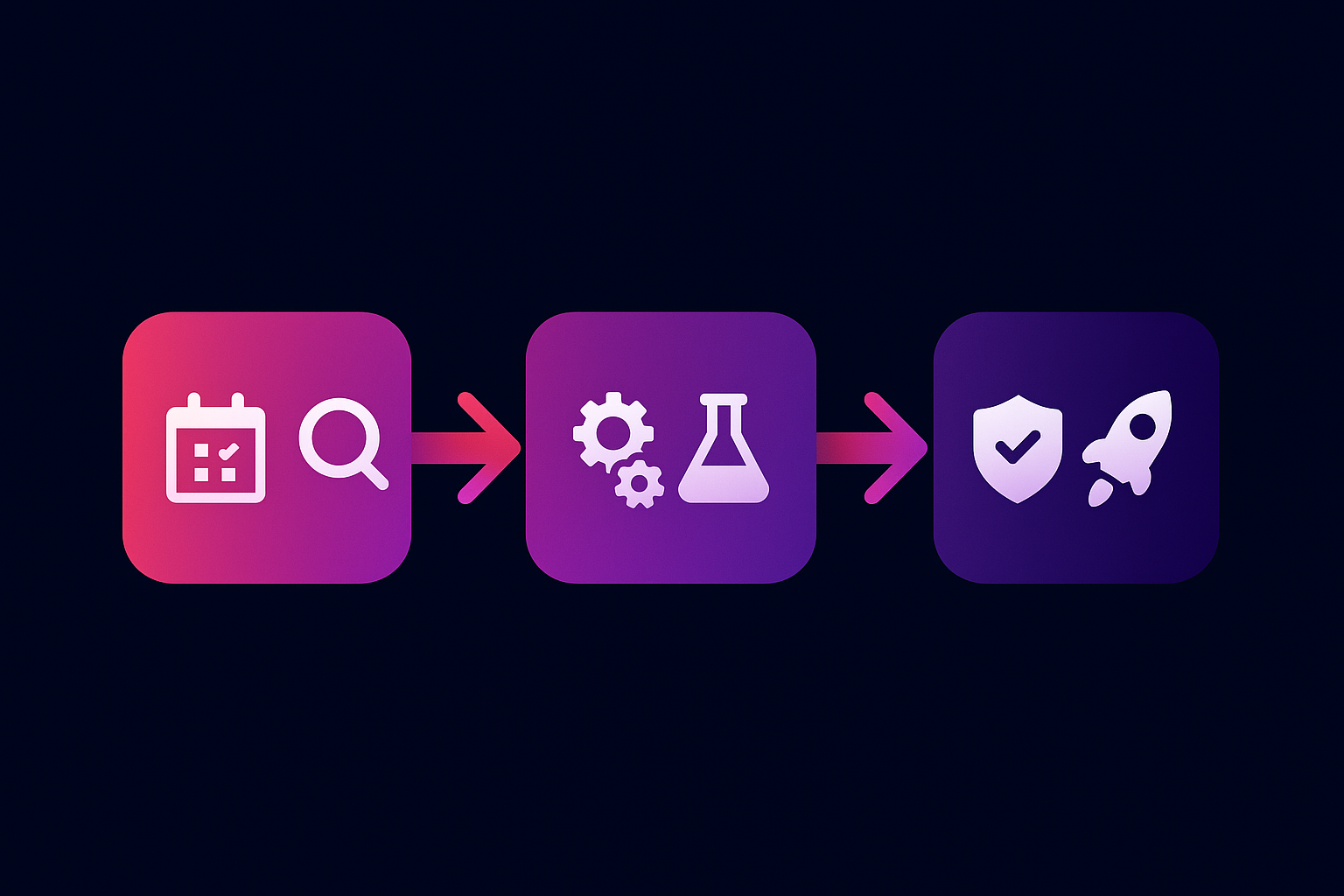
Implementing bias-free AI does not require a multi-year transformation. The following time-boxed plan moves teams from assessment to action.
Days 1-30: Assess and Plan
- Map current AI touchpoints across sourcing, screening, interviewing, and selection
- Identify data sources and historical hiring patterns
- Select fairness metrics aligned with regulatory requirements
- Define governance roles: who owns bias audits, who reviews results?
Days 31-60: Pilot and Test
- Run baseline bias audits on existing tools
- Pilot new or updated AI features with a control group
- Apply the four-fifths rule and permutation tests
- Document findings in an audit log
Days 61-90: Deploy and Monitor
- Roll out validated tools with human-in-the-loop checkpoints
- Establish quarterly audit cadence
- Train recruiters on interpreting AI recommendations
- Communicate fairness commitments to candidates and stakeholders
"AI assurance is an iterative process that should be embedded throughout your business practices, to ensure your systems are set up responsibly and for long-term success."
For teams lacking internal expertise, platforms like Adway integrate directly with existing ATS systems and include built-in targeting and scoring safeguards, accelerating time to compliant deployment.
Key Takeaways
Bias-free AI hiring is achievable when organizations commit to structured audits, transparent metrics, and human oversight.
- AI can reduce subjective bias when trained on clean data and monitored for fairness
- Social recruiting expands candidate pools beyond traditional networks, improving diversity and quality of hire
- Regulatory frameworks from the EEOC, UK government, and SIOP provide actionable guidance
- Quarterly bias audits and human-in-the-loop design are non-negotiable safeguards
- Clients report measurable gains: "Time to hire shortened by 24% measured conservatively," alongside a 36% boost in quality of hire
Ready to see how responsible AI and social recruiting work together? Explore Adway's solutions to build fairer, faster hiring workflows.
Frequently Asked Questions
What are the key steps to ensure AI hiring is bias-free?
To ensure AI hiring is bias-free, audit historical data for hidden patterns, strip protected attributes during screening, run algorithmic fairness tests, maintain statistical parity targets, keep a human-in-the-loop, log algorithmic decisions for audit, use diverse validation datasets, and repeat bias audits quarterly.
How does Adway help reduce bias in hiring?
Adway reduces bias in hiring by using social recruiting to reach untapped talent, expanding diversity in talent pools, and implementing AI-driven tools that focus on fairness and transparency. This approach helps clients achieve a 36% boost in quality of hire and a 59% reduction in time-to-hire.
What regulations govern AI recruitment practices?
AI recruitment practices are governed by several regulations, including U.S. EEOC guidance, UK Responsible AI in Recruitment guide, and SIOP guidelines. These frameworks emphasize the importance of fairness, consistency, and lack of predictive bias in AI-based hiring assessments.
How can social recruiting improve diversity in hiring?
Social recruiting improves diversity by placing job opportunities in the feeds of passive candidates who may not visit traditional job boards. This approach broadens the talent pool and reduces reliance on keyword-matching, which can encode credential bias.
What metrics should be tracked to ensure fair AI hiring?
To ensure fair AI hiring, track metrics such as selection rate parity, true positive rate equality, time-to-hire, quality of hire, cost per application, and audit cadence. These metrics help balance speed and fairness in recruitment processes.
Sources
- https://www.gov.uk/government/publications/responsible-ai-in-recruitment-guide/responsible-ai-in-recruitment
- https://hbr.org/2026/new-research-on-ai-and-fairness-in-hiring
- https://adway.ai/
- https://onlinelibrary.wiley.com/doi/10.1111/ijsa.12519
- https://quality.arc42.org/requirements/hiring-algorithm-bias-mitigation
- https://www.eeoc.gov/laws/guidance/select-issues-assessing-adverse-impact-software-algorithms-and-artificial
- https://www.gov.uk/data-ethics-guidance/responsible-ai-in-recruitment-guide
- https://www.siop.org/wp-content/uploads/legacy/SIOP-AI%20Guidelines-Final-010323.pdf
- https://www.linkedin.com/blog/engineering/fairness/lift-addressing-bias-in-large-scale-ai-applications
- https://adway.ai/social-audit
- https://www.g2.com/compare/workday-hiredscore-ai-for-recruiting-vs-seekout
- https://www.gartner.com/reviews/market/talent-management-suites/vendor/eightfold/product/eightfold-talent-intelligence-platform
- https://www.hirevue.com/blog/hiring/ai-impact-recruitment-metrics
- https://www.carv.com/blog/how-to-reduce-time-to-hire-with-ai
- https://adway.ai/solutions