
How to Use AI in Hiring to Improve Candidate Quality
Discover how AI enhances hiring by improving candidate quality, reducing costs, and ensuring compliance with emerging regulations.
How to Use AI in Hiring to Improve Candidate Quality
AI in hiring uses machine learning and automation to streamline recruitment processes, from sourcing to screening. Organizations implementing AI-powered hiring tools report 59% reduction in time-to-hire and 36% improvement in quality of hire. The technology automates repetitive tasks like resume screening and candidate matching while helping recruiters focus on relationship building and strategic decision-making.
TLDR
• AI recruitment tools automate sourcing, screening, and candidate engagement, with 70% of companies experimenting with AI doing so within HR functions
• Quality of hire remains the top priority for 75% of talent acquisition leaders, yet only 23% of organizations would rehire 76-100% of recent hires
• The EU AI Act classifies recruitment AI as high-risk, requiring compliance measures including audit logging and bias testing by August 2026
• Organizations using AI-driven platforms achieve measurable ROI, including 54% lower cost per application and 255% three-year return on investment
• Time savings is the most recognized benefit of AI in recruitment, cited by 70% of HR professionals
• Successful implementation requires phased approach: foundation setting, pilot testing, and strategic scaling over 90 days
AI is reshaping recruitment. For talent acquisition teams facing talent shortages, rising hiring costs, and pressure to deliver better hires faster, artificial intelligence offers a practical path forward. This guide explains what AI-powered hiring actually means, where it creates value, how to stay compliant with emerging regulations, and how to build a tech stack that delivers measurable results.
What is AI-powered hiring and why does it matter?
AI-powered hiring uses algorithms, automation, and machine learning to support decisions across the recruitment pipeline. According to a multidisciplinary survey published on arXiv, algorithmic hiring comprises tools and systems that automate or assist HR decisions on candidate recruitment and evaluation, spanning sourcing, screening, selection, and performance tracking.
The adoption curve is steep. LinkedIn's Future of Recruiting report found that 73% of TA pros agree AI will change the way organizations hire. Meanwhile, BCG research shows 70% of companies experimenting with AI are doing so within HR, with talent acquisition as a primary focus.
For candidates, AI can mean faster responses, more relevant job matches, and a smoother application experience. For recruiters, it means less time on repetitive tasks and more time building relationships. "AI helps with the mundane parts of HR, which lets us use our time more effectively," says Victoria Söderlind, senior recruitment specialist at Toyota Material Handling Europe, in a LinkedIn case study.
Why is "quality of hire" the metric that moves the needle?
Quality of hire has become the north star for talent acquisition. According to Adway, 75% of TA leaders say candidate quality is their top priority. LinkedIn's research reinforces this: 89% of TA pros agree it will become increasingly important to measure quality of hire.
Yet most organizations struggle to get it right. HR.com's Future of Recruitment Technologies report found that only 23% of organizations would rehire 76 to 100 percent of employees hired in the past 12 months. The same report shows only 43% of organizations rate their talent acquisition stack as "good" or "excellent."
The gap between intent and execution is where AI creates opportunity. Organizations that embrace advanced technologies see stronger outcomes in quality of hire, retention, and time-to-fill, according to the HR.com report.
Key takeaway: Quality of hire matters because it directly impacts retention, productivity, and business outcomes. AI tools help close the gap between what TA teams need and what most tech stacks deliver.
Where does AI create value across the hiring funnel?
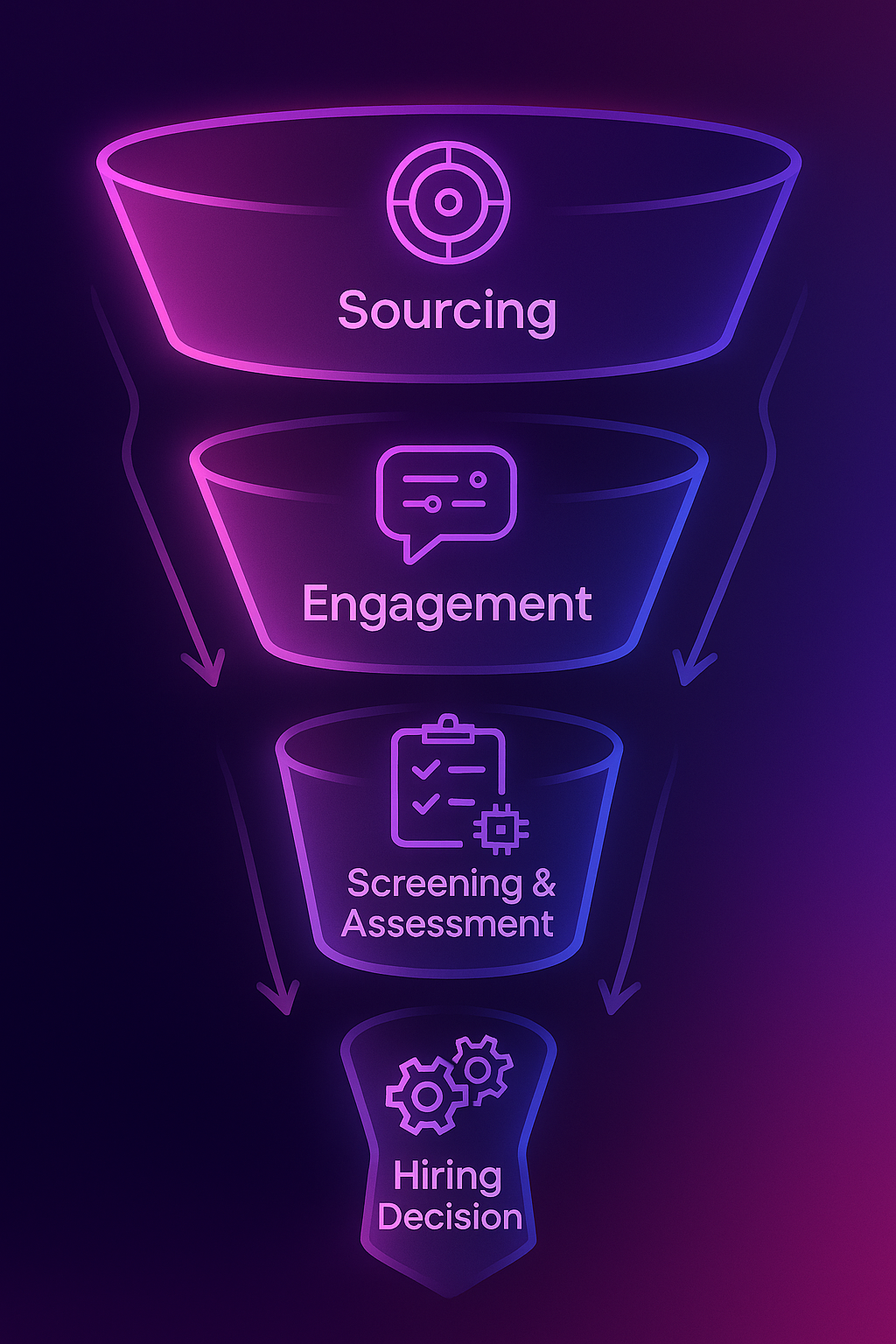
AI touches every stage of recruitment, from sourcing to screening to engagement. According to Broadbean, AI programmatic advertising leverages machine learning to place job ads in front of the right candidates at the right time, analyzing data from past job postings and candidate behaviors to determine where and when to display ads for maximum impact.
The value shows up in three core areas:
Automation: AI streamlines recruitment by automating job ad placements, bid adjustments, and targeting, eliminating manual interventions.
Precision targeting: Machine learning tools refine targeting by analyzing job seeker behavior, engagement patterns, and career preferences.
Candidate engagement: Adway's solutions use AI-generated, role-specific screening questions to ensure precision in candidate evaluation, while data-driven assessments help move high-quality talent through the pipeline.
AI sourcing & social recruiting
Most sourcing efforts still rely on cold outreach. Findem's 2026 State of Sourcing Channel Performance report found that 85% of sourcing efforts are still focused on contacting candidates with no prior connection to the company. A multichannel approach consistently outperforms reliance on cold sourcing alone.
Social recruiting changes the equation. Adway's platform targets top-tier talent before they even start looking, using AI-driven analysis of real-time behavioral data to reach qualified, pre-engaged candidates not found in CV databases. With 4.9 billion social media users spending an average of 2.5 hours a day scrolling, social feeds have become a primary talent channel.
Radancy's research shows AI is increasingly used to interpret candidate behavior in real time, helping employers create targeted, dynamic job ads. AI enables recruiters to analyze engagement data to surface candidates engaging with employer content and deliver tailored messaging that resonates.
Automating screening & assessment
Screening is where AI delivers immediate efficiency gains. Machine learning can score narrative information collected from candidates as accurately and reliably as human judges, but much more efficiently, according to research published in Personnel Psychology.
A ScienceDirect study comparing AI and human assessments in IT recruitment found AI assessments are significantly faster but less consistent than human reviews. There was no significant score-average difference between human and AI assessments, suggesting AI can supplement human evaluators without fully replacing nuanced judgment.
Adway's Smart Scorecard uses AI to generate role-specific screening questions and data-driven assessments that streamline decision-making, helping recruiters shortlist candidates more efficiently without requiring CV uploads.
How can TA teams meet EU AI Act compliance while reducing bias?
The EU AI Act, which entered into force in August 2026, classifies recruitment AI as high-risk. According to the European Commission, AI tools for employment, management of workers, and access to self-employment, such as CV-sorting software for recruitment, are explicitly listed as high-risk applications.
High-risk AI systems face strict obligations:
Adequate risk assessment and mitigation systems
High-quality datasets to minimize discriminatory outcomes
Logging of activity to ensure traceability
Clear information to deployers about how the system works
Appropriate human oversight measures
High levels of robustness, cybersecurity, and accuracy
The Act will be fully applicable by August 2026, giving organizations time to prepare but requiring compliance work to begin now.
Bias remains a central concern. The European Data Protection Supervisor notes that AI systems can produce results that integrate prejudiced viewpoints or unfair preferences. The UK's Information Commissioner's Office audited several AI recruitment providers and made almost 300 recommendations, including ensuring personal information is processed fairly and clearly explaining to candidates how their information will be used.
Practical steps for TA teams:
| Action | Purpose |
|---|---|
| Document training data sources | Demonstrate data quality and minimize bias risk |
| Implement audit logging | Ensure traceability of AI decisions |
| Provide human override capability | Maintain appropriate oversight |
| Communicate clearly to candidates | Meet transparency requirements |
| Conduct regular bias testing | Identify and address discriminatory patterns |
The AI Act's guidelines on general-purpose AI models enter application on 2 August 2026, making preparation urgent.
Which ROI metrics prove AI hiring pays off?
The business case for AI in hiring is built on measurable outcomes. Adway's 2026 Annual Report shows customers achieve a 59% reduction in time-to-hire, a 36% boost in quality of hire, €194 return for every €1 spent, and a 54% reduction in cost per application.
Case studies reinforce these numbers. Nexer Recruit, a Swedish recruitment firm, partnered with Adway and achieved "381% more applications with Adway automated recruitment marketing" and "time to hire shortened by 24% measured conservatively," according to the Nexer Recruit case study.
An IDC white paper on Employ's talent acquisition solutions found organizations using AI-driven platforms achieved a 255% three-year ROI, a 37% reduction in hiring manager time per new hire, and a 33% improvement in application quality.
The numbers matter because they translate directly to business outcomes. Faster time-to-hire means reduced vacancy costs. Higher quality of hire means better retention and productivity. Lower cost per application means more efficient use of recruitment budgets.
Key takeaway: AI hiring ROI shows up in time savings, quality improvements, and cost reductions. Track these metrics to justify investment and demonstrate value to finance and executive stakeholders.
Which AI recruiting tech stack fits your hiring goals?
The AI recruiting landscape includes platforms for sourcing, screening, engagement, and end-to-end talent acquisition. Choosing the right stack depends on your organization's scale, hiring volume, and integration requirements.
Adway integrates with Greenhouse and other leading ATS platforms, offering 54% lower cost per application, 33% higher quality per hire, and 72% diversity lift. The platform automates social campaigns, uses AI for candidate screening, and provides full source attribution.
Oracle has been positioned furthest to the right for Completeness of Vision in Gartner's recruiting reports, with embedded AI capabilities that help organizations enhance candidate experience, grow talent pools, and streamline hiring.
Sense focuses on automated communication technology and talent engagement software, with capabilities ranging from two-way texting to Net Promoter Score tracking. The platform's automation significantly reduces time on repetitive tasks like candidate outreach and follow-ups.
Greenhouse was named a Visionary in the 2026 Gartner Magic Quadrant for Talent Acquisition Suites, with AI features for talent rediscovery, automated interview planning, and bias-reducing resume parsing.
When evaluating platforms, consider:
ATS integration: Does the platform connect seamlessly with your existing systems?
Automation capabilities: Which manual tasks can be eliminated?
Reporting and analytics: Can you track quality of hire and ROI?
Compliance features: Does the platform support AI Act requirements?
Pricing model: Is it consumption-based or license-based?
90-day roadmap to launch AI-driven hiring
Implementing AI in hiring requires a phased approach that balances quick wins with sustainable change. McKinsey's research on generative AI in HR found that only 3% of organizations currently use generative AI in HR, despite its potential to reduce time on administrative tasks by 60 to 70 percent.
LinkedIn's Future of Recruiting report emphasizes that "AI is a powerful tool, but human oversight is what ensures it's used responsibly and effectively," according to Jackye Clayton.
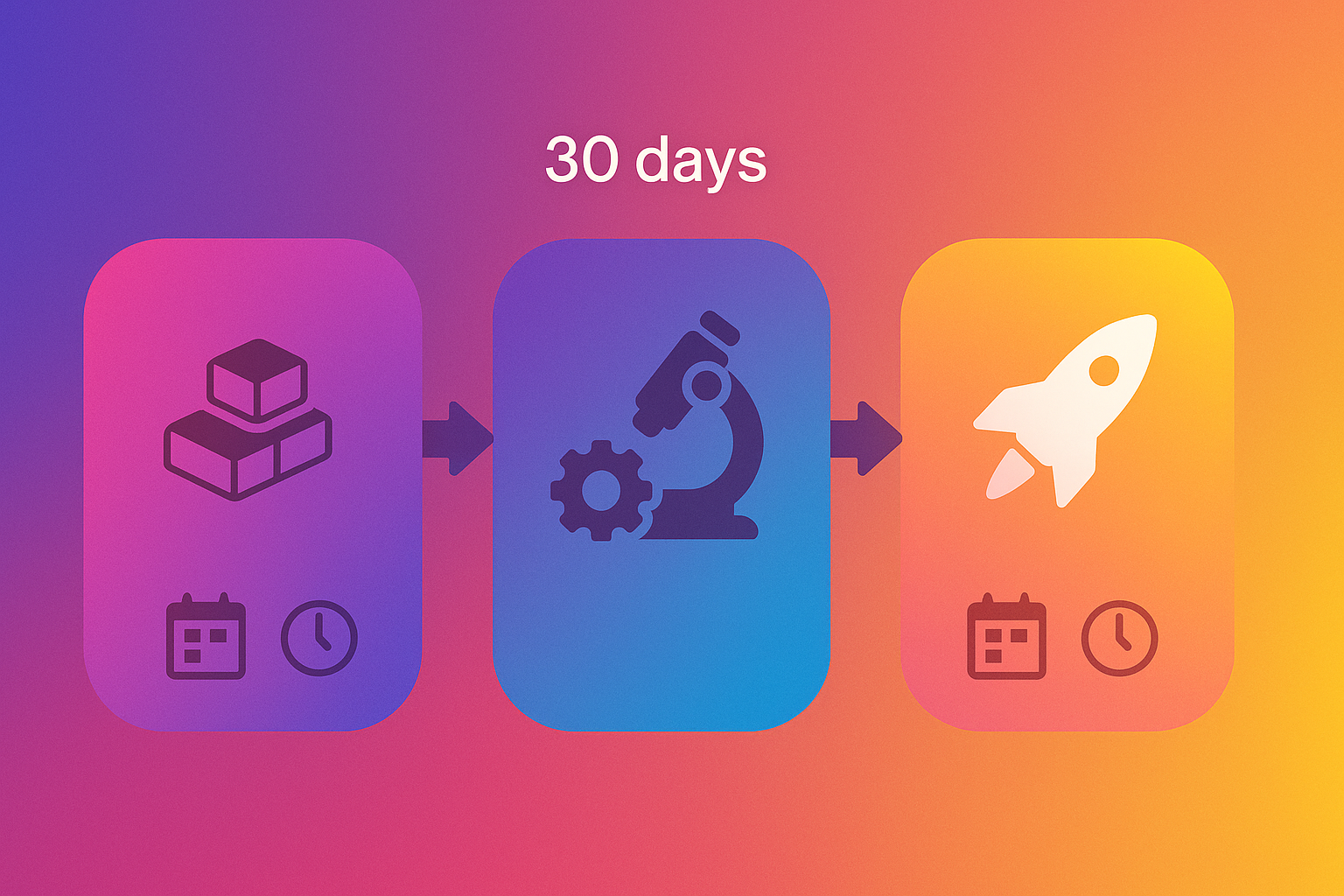
Days 1-30: Foundation
Audit current recruitment processes and identify automation opportunities
Define quality of hire metrics and baseline measurements
Select pilot roles or departments for initial implementation
Evaluate AI platforms against ATS integration requirements
Days 31-60: Pilot
Implement chosen AI tools for pilot group
Train recruiters on new workflows and human oversight responsibilities
Establish feedback loops for candidates and hiring managers
Begin tracking ROI metrics and quality indicators
Days 61-90: Scale
Expand successful pilots to additional teams or roles
Refine workflows based on pilot learnings
Document compliance procedures for AI Act readiness
Communicate results to stakeholders and plan next phase
HR.com research shows time savings is the most recognized benefit of AI, cited by 70% of respondents. Start with high-volume, repetitive tasks to demonstrate value quickly.
From pilot to competitive edge
AI in hiring has moved from experimental to essential. Organizations that integrate AI thoughtfully, with attention to quality of hire, candidate experience, and regulatory compliance, gain a sustainable advantage in competing for talent.
Adway has been recognized as a Core Leader in the 2026 Fosway 9-Grid for Talent Acquisition for the fourth consecutive year, reflecting strong market and customer performance at enterprise scale. The platform's approach combines AI-driven social recruiting with seamless ATS integration, delivering measurable improvements in quality of hire while maintaining transparency and control.
The next step is clear: identify where AI can create the most value in your recruitment process, pilot with discipline, and scale what works. The organizations that move now will be the ones that attract and retain the talent they need to grow.
Frequently Asked Questions
What is AI-powered hiring?
AI-powered hiring uses algorithms, automation, and machine learning to support recruitment decisions, enhancing efficiency and candidate quality across the hiring process.
How does AI improve the quality of hire?
AI improves the quality of hire by automating repetitive tasks, enabling precise targeting, and using data-driven assessments to ensure high-quality candidates are shortlisted.
What are the compliance requirements for AI in hiring under the EU AI Act?
The EU AI Act requires high-risk AI systems to have risk assessments, high-quality datasets, activity logging, human oversight, and robust security measures to minimize bias and ensure transparency.
How does Adway's platform enhance recruitment?
Adway's platform uses AI-driven social recruiting to target passive candidates, automate job ad placements, and integrate seamlessly with ATS systems, improving quality of hire and reducing costs.
What ROI metrics demonstrate the effectiveness of AI in hiring?
Key ROI metrics include reduced time-to-hire, improved quality of hire, lower cost per application, and overall cost savings, demonstrating the financial benefits of AI in recruitment.
Sources
- https://adway.ai/attract-1
- https://www.bcg.com/publications/2025/ai-changing-recruitment
- https://eightfold.ai/learn/hr-coms-future-of-recruitment-technologies-2025-26/
- https://arxiv.org/pdf/2309.13933
- https://business.linkedin.com/talent-solutions/resources/future-of-recruiting
- https://www.linkedin.com/business/talent/blog/talent-acquisition/early-impact-of-linkedin-ai-tools-for-recruiters
- https://www.broadbean.com/resources/blog/recruitment/ai-programmatic-advertising/
- https://adway.ai/solutions
- https://www.findem.ai/guides-and-infographics/state-of-sourcing-channel-performance-2025
- https://adway.ai/why-use-social-recruiting-technology
- https://blog.radancy.com/2025/10/02/social-media-ai-recruiting-how-hr-teams-cantransform-hiring/
- https://onlinelibrary.wiley.com/doi/full/10.1111/peps.12608
- https://www.sciencedirect.com/science/article/pii/S0957417424027350
- https://digital-strategy.ec.europa.eu/en/policies/regulatory-framework-ai
- https://www.edps.europa.eu/data-protection/our-work/publications/guidelines/2025-10-28-guidance-generative-ai-strengthening-data-protection-rapidly-changing-digital-era_en
- https://ico.org.uk/for-organisations/uk-gdpr-guidance-and-resources/artificial-intelligence/ai-in-recruitment-a-guide-for-employers/
- https://ec.europa.eu/
- https://adway.ai/insights
- https://pages.employinc.com/rs/659-JST-226/images/The%20Business%20Value%20of%20Employ%20Whitepaper%20-%20IDC.pdf?version=0
- https://integrations.greenhouse.com/partners/adway-social-recruiting-technology
- https://www.oracle.com/news/announcement/oracle-positioned-highest-for-ai-innovations-use-case-in-new-gartner-reports-2025-01-01/
- https://trustradius.com/products/sense/reviews
- https://www.greenhouse.com/gartner
- https://www.mckinsey.com/capabilities/people-and-organizational-performance/our-insights/the-organization-blog/four-ways-to-start-using-generative-ai-in-hr
- https://www.fosway.com