
How to Use AI in Hiring at Scale in 2026
Discover how AI transforms hiring at scale, enhancing speed, quality, and efficiency in recruitment processes.
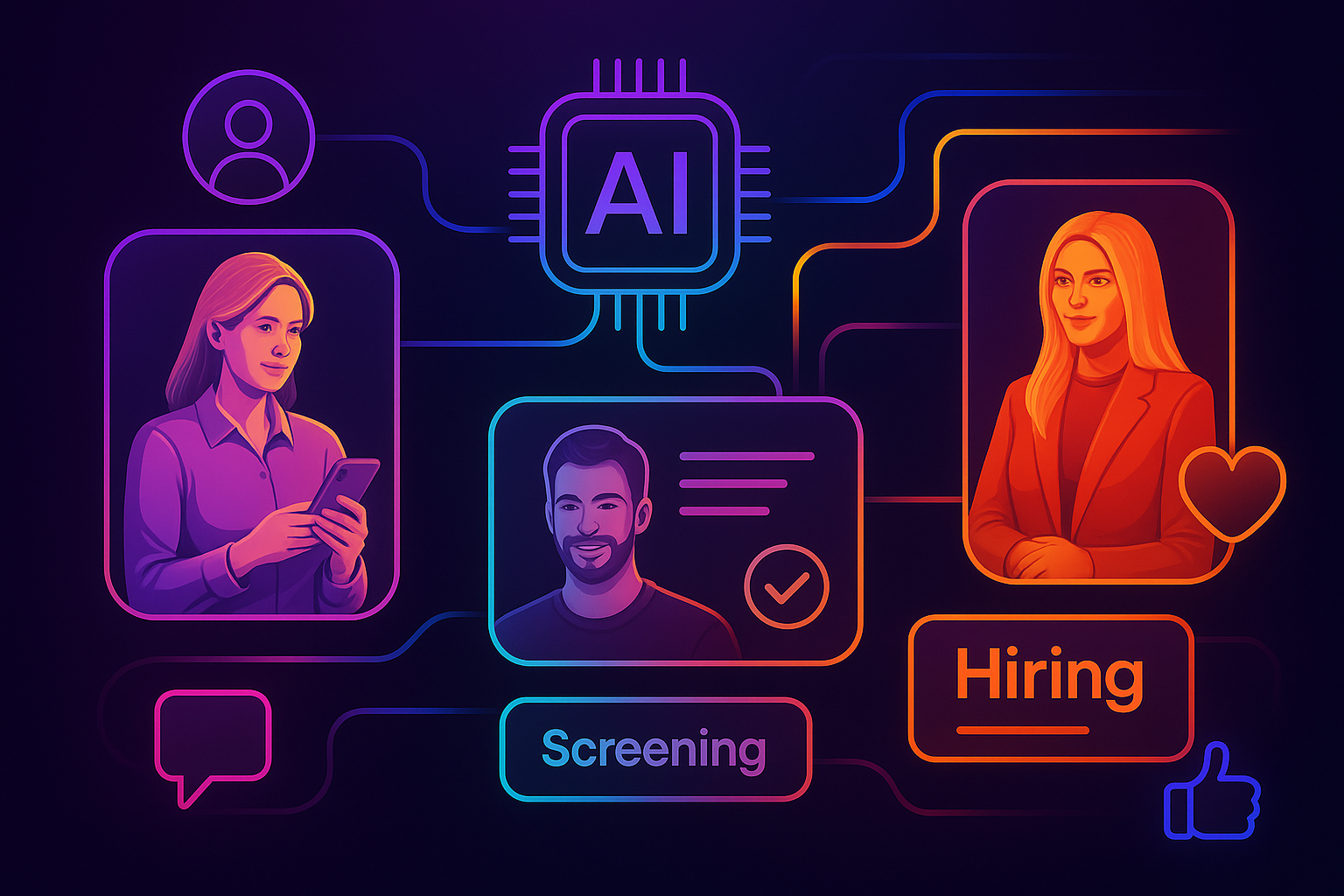
How to Use AI in Hiring at Scale
AI in hiring automates sourcing, screening, and engagement tasks to help talent acquisition teams scale efficiently. Organizations using AI recruiting tools report 59% faster time-to-hire and 36% improvement in quality by targeting passive candidates on social platforms and automating repetitive workflows while maintaining human oversight for critical decisions.
TLDR
- AI recruiting tools save recruiters one full workday per week by automating administrative tasks like screening and scheduling
- Social recruiting technology reaches 4.9 billion social media users who spend 2.5 hours daily scrolling feeds
- Companies achieve €194 return for every €1 spent on AI-powered talent acquisition platforms
- Smart scorecards and automated candidate profiles reduce manual CV review time while improving match quality
- Responsible AI frameworks with bias audits and compliance checks ensure fair, transparent hiring practices
- Integration with existing ATS platforms enables seamless adoption without disrupting current workflows
When requisitions spike and applicant volumes surge, mid-market talent acquisition teams feel the pressure. Reviewing hundreds of CVs, coordinating interviews, and keeping candidates engaged can overwhelm even experienced recruiters. AI in hiring offers a way to restore speed and consistency without losing the human touch that great recruitment requires.
This guide walks you through deploying AI across the hiring workflow, from sourcing passive candidates on social media to proving ROI with dashboards that matter.
Why Does AI in Hiring Matter When You're Scaling Fast?
AI in hiring refers to software that automates or augments recruiting tasks. It can target passive talent on social feeds, screen applications, schedule interviews, and even predict candidate success. Used well, it slashes time-to-hire, improves quality of hire, and frees recruiters for conversations that require empathy and judgement.
The urgency is real. According to HR.com's Future of Recruitment Technologies report, only 43% of organisations rate their talent acquisition stack as "good" or "excellent." At the same time, 53% expect AI use in recruitment to increase, signalling that TA leaders know the status quo is not enough.
LinkedIn research reinforces the point: recruiters using generative AI tools save roughly 20% of their work week, the equivalent of a full day every week. Those hours can shift from administrative tasks to strategic work such as employer branding, hiring-manager coaching, and candidate relationship-building.
Adway's recognition as a Core Leader in the 2026 Fosway 9-Grid for Talent Acquisition reflects how social recruiting technology is now central to enterprise hiring strategies. The market is moving fast, and teams that delay adoption risk falling behind.
Key takeaway: AI in hiring is no longer experimental. It is the lever that lets TA teams scale without sacrificing candidate quality or recruiter wellbeing.
What Results Can AI Recruiting Deliver?
Numbers speak louder than promises. Here is what organisations using AI recruiting tools have achieved:
| Metric | Improvement | Source |
|---|---|---|
| Time-to-hire | 59% reduction | Adway 2026 Annual Report |
| Quality of hire | +36% boost | Adway 2026 Annual Report |
| Cost per application | 54% lower | Greenhouse Partner Directory |
| Return on spend | €194 for every €1 | Adway 2026 Annual Report |
| Time-to-hire (supply chain firm) | 59% decrease | pymetrics case study |
These gains come from automating low-value tasks and letting recruiters focus on high-impact activities. A supply chain management firm using pymetrics assessments assessed 20,000 candidates for Package Handler roles, saved 1,800 interview hours, and improved retention by 10%.
Quality of hire matters most to TA leaders. LinkedIn's Future of Recruiting report notes that 89% of TA professionals agree measuring quality of hire will become increasingly important. AI tools that surface candidates with the skills and behaviours that predict success help organisations hit that target.
Which AI Recruiting Tools Make Up a Scalable Hiring Stack?
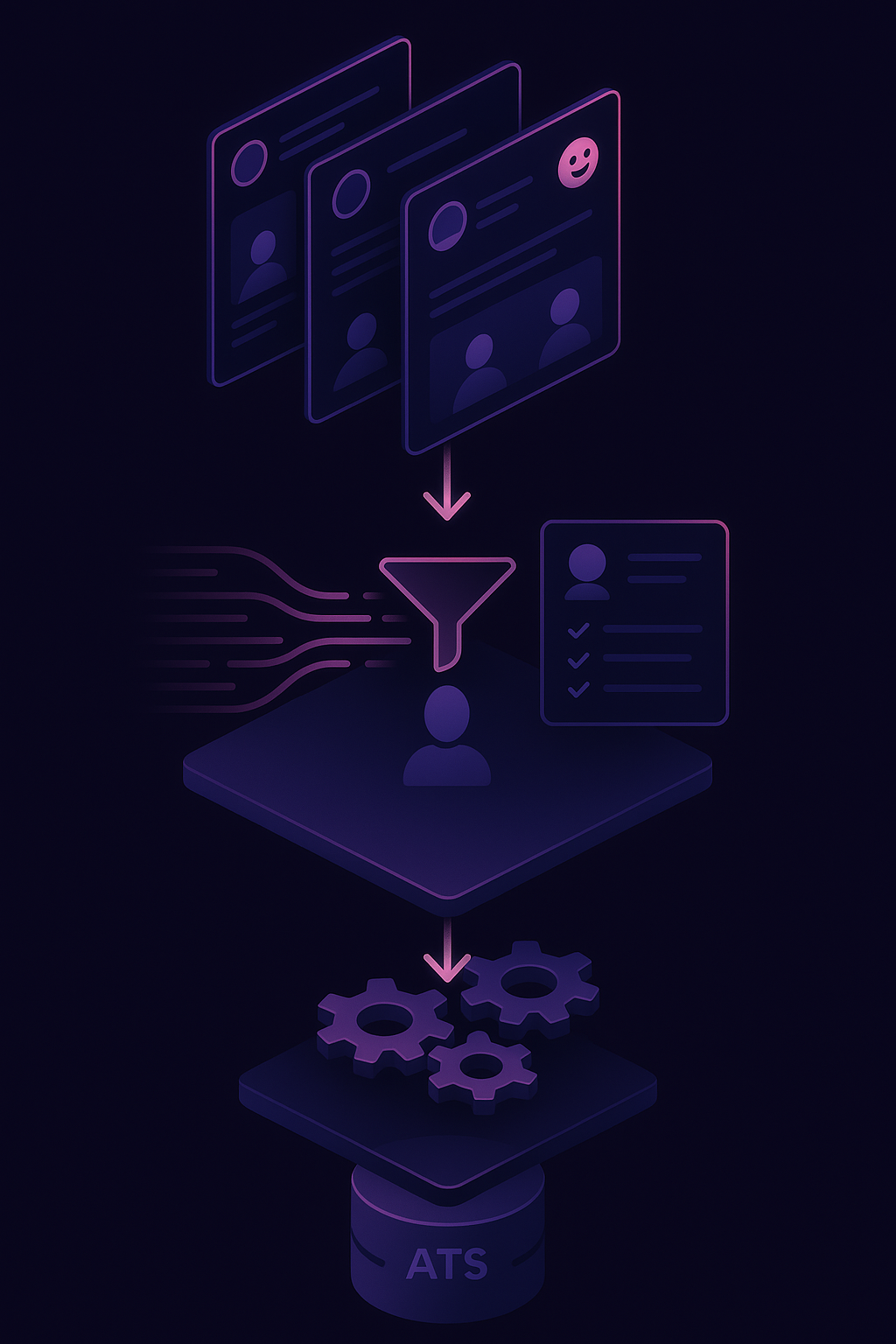
A scalable hiring stack combines sourcing, screening, and integration layers. Each layer serves a distinct purpose:
- Sourcing: AI targets passive candidates on social platforms, job boards, and professional networks.
- Screening: Algorithms rank applicants, generate scorecards, and build candidate profiles.
- Integration: APIs push qualified leads into your ATS so recruiters work in familiar systems.
Social Apply captures candidates directly within social feeds using one-click applications, ensuring 100% source attribution and seamless ATS integration. Unified API platforms now offer access to 66+ pre-built ATS integrations with normalised hiring data and zero maintenance.
LinkedIn's AI-Assisted Messages increased InMail acceptance rates by 40%, demonstrating how AI can improve recruiter outreach at scale.
Social Recruiting & Programmatic Reach
Passive candidates are not searching job boards. They are scrolling social media, where 4.9 billion users spend an average of 2.5 hours daily. Social recruiting technology places job ads and employer brand content directly in their feeds.
Multi-platform activation across Facebook, Instagram, LinkedIn, TikTok, and more unlocks social talent pools. Nexer Recruit, a Swedish IT recruitment firm, saw "381% more applications with Adway automated recruitment marketing," with one-third of tech applications now sourced via Adway and time-to-hire shortened by 24%.
By 2026, Gartner predicts that 60% of enterprise organisations will adopt a responsible AI framework for HR technology, reinforcing the momentum behind AI-driven talent attraction.
Smart Screening, Profiles & Scorecards
Once candidates apply, AI screening tools prioritise the best fits:
- Smart Scorecard: AI-driven, role-specific screening questions with weighted scoring highlight top applicants.
- Smart Profile: Automatically extracts work history, skills, education, and LinkedIn data to create rich candidate profiles without requiring CV uploads.
- Agentic AI: Eightfold's recruiting suite uses multi-modal LLMs to look beyond résumés and identify true potential, augmenting recruiters with agents that generate job descriptions, interview questions, and engagement messages.
Paradox reports a 58% decrease in time-to-apply using conversational AI, while Flynn Group automates 90% of its hiring process with the same technology.
How Do You Implement AI Across the Hiring Workflow?
Rolling out AI recruiting tools requires a phased approach with governance checkpoints at each stage:
- Audit your current stack. Map existing tools, data flows, and pain points. Identify quick wins where AI can reduce manual effort.
- Start with high-volume, low-risk tasks. Job-description generation, interview scheduling, and candidate nurturing are ideal starting points.
- Integrate with your ATS. Ensure new tools push data into existing systems so recruiters do not toggle between platforms.
- Measure before and after. Track time-to-hire, cost-per-application, and quality-of-hire metrics to prove impact.
- Scale with guardrails. Expand AI use only after validating accuracy, fairness, and compliance.
PwC's analysis of AI agents in HR suggests that agents can reduce human effort by 40-50% across HR and up to 70% in talent sourcing. Gartner Peer Community research finds that 74% of HR professionals believe the benefits of generative AI in hiring outweigh the risks.
LinkedIn Recruiter's AI-Assisted sessions achieve an 18% higher InMail acceptance rate compared to manual filter sessions, showing how phased AI adoption can lift performance incrementally.
Data, Integrations & Change Governance
Technology is only part of the equation. Successful implementation also requires:
- API readiness: Ensure your ATS supports real-time data exchange. Platforms like Unified.to offer transparent usage-based pricing that scales with API volume, not customer count.
- Data mapping: Define which candidate fields flow between systems. Standardise job titles, skills, and locations to improve AI matching accuracy.
- Change management: Train recruiters to use new tools and interpret AI recommendations. PwC increased Workday Recruiting adoption from 30% to 90% across its network, saving an estimated 9,000 hours in a fiscal year.
- Source attribution: Nexer Recruit's partnership delivered a 24% reduction in time-to-hire by tracking candidate touchpoints from first click to hire.
Building Trust: Responsible & Compliant AI Hiring
AI can improve fairness when designed and monitored correctly. It can also amplify bias if left unchecked. Responsible deployment addresses both risks and regulation.
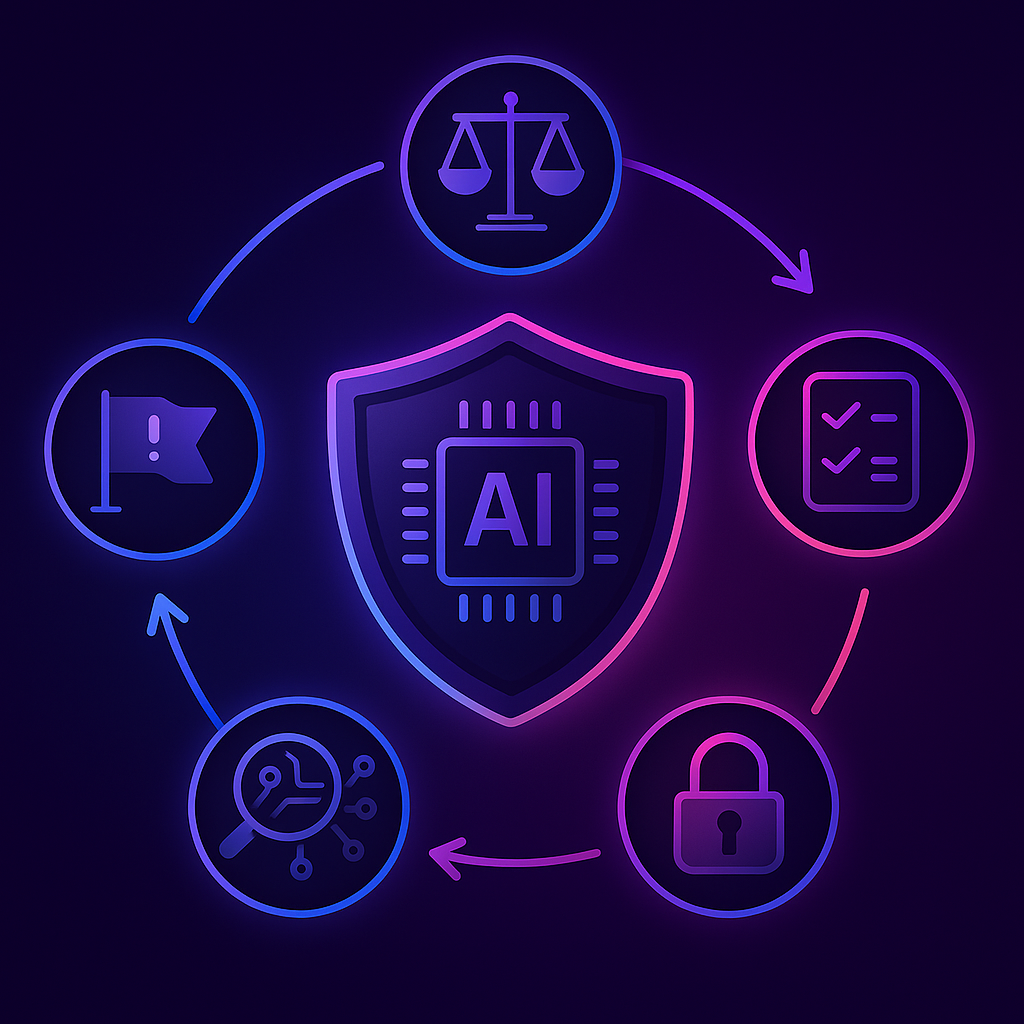
The UK Government's guidance on Responsible AI in Recruitment outlines five regulatory principles: safety and robustness, transparency, fairness, accountability, and contestability. Organisations should:
- Complete a Data Protection Impact Assessment (DPIA) before deployment.
- Request bias audits from vendors and repeat them at regular intervals.
- Document how AI recommendations are used in hiring decisions.
The ICO conducted audits of AI recruitment tools and made nearly 300 recommendations for compliance improvements, all accepted or partially accepted by providers. "AI can bring real benefits to the hiring process, but it also introduces new risks that may cause harm to jobseekers if it is not used lawfully and fairly," the ICO states.
Algorithmic fairness techniques include pre-processing, in-processing, and post-processing interventions. Testing for bias before go-live and documenting potential discriminatory outputs protects both candidates and employers.
Adway vs. Other AI Recruiting Platforms – Real-World Results
How does Adway compare to other AI recruiting platforms? The table below summarises key characteristics:
| Platform | Primary Strength | Notable Metric |
|---|---|---|
| Adway | Social recruiting, passive-candidate targeting | "1 out of 3 tech applications now come through Adway" – Nexer Recruit |
| Paradox (Olivia) | Conversational AI, high-volume frontline hiring | Trusted by 200+ organisations in 60+ countries |
| Teamtailor | ATS with employer branding tools | Ease-of-use score 9.2 vs. competitors' 7.6 |
| Phenom | Intelligent Talent Experience platform | Reduced screening time from 20 to 8 minutes, 7:1 to 3:1 candidate-to-hire ratio |
Paradox's Olivia automates screening, scheduling, and onboarding, making it ideal for retail, hospitality, and healthcare hiring where speed is critical. Teamtailor combines an ATS with career-site builder and 450+ integrations, though it focuses more on employer branding than programmatic ad distribution. Phenom offers a full talent experience suite but carries higher implementation complexity.
Adway differentiates through always-on social campaigns that feed pre-engaged, qualified candidates directly into your ATS. Its consumption-based pricing model and mid-market focus make it accessible to growth companies that need agency-level results without agency-level fees.
How Do You Prove ROI After Deploying AI in Hiring?
Dashboards should track metrics that matter to the business, not vanity metrics like raw pipeline volume. Recommended KPIs include:
| KPI | Why It Matters |
|---|---|
| Time-to-hire | Measures process efficiency and candidate experience. Benchmark: 42% reduction is achievable. |
| Cost-per-hire | Captures sourcing, advertising, and recruiter time. AI users report 37% decreases. |
| Quality of hire | Tracks first-year performance and retention. +36% improvement signals better matches. |
| Source attribution | Shows which channels deliver hires, not just clicks. 100% source attribution. |
| ROI | Compares technology cost to hiring savings. Clients achieve €194 return for every €1 spent. |
Research from Findem notes that "recruiters often rely on 'vanity metrics' like pipeline volume or the number of offers made—figures that look impressive on a dashboard but don't always reflect real value." AI enables the shift to business-impact metrics by providing richer, outcome-oriented data points.
HR.com data confirms that time savings is the most recognised benefit of AI, cited by 70% of respondents. Yet retention of new hires remains the most effectively measured outcome, with 48% rating their ability as above average. Closing the gap between efficiency metrics and quality metrics is where AI delivers the greatest strategic value.
From Pilot to Competitive Advantage
AI in hiring is not a single tool or feature. It is a capability that compounds over time. Organisations that start with a focused pilot, measure results rigorously, and scale responsibly will outpace competitors still relying on manual processes.
Key takeaways:
- Speed matters. AI can cut time-to-hire by 59%, giving you first access to top talent.
- Quality wins. Targeting passive candidates on social media improves fit and reduces early attrition.
- Integration is essential. Tools that plug into your existing ATS minimise disruption and accelerate adoption.
- Governance builds trust. Bias audits, DPIAs, and transparent processes protect candidates and employers alike.
Adway combines AI targeting, Social Apply, and smart scorecards to attract and rank passive talent directly in social feeds. Clients report a 59% cut in time-to-hire, a 36% boost in quality of hire, and a €194 return for every €1 spent. As a Core Leader in the 2026 Fosway 9-Grid for Talent Acquisition for the fourth consecutive year, Adway offers mid-market and enterprise teams a proven path from pilot to competitive advantage.
Ready to see what AI-powered social recruiting can do for your hiring? Explore Adway and start building talent pools that deliver better candidates, faster.
Frequently Asked Questions
What is AI in hiring?
AI in hiring refers to software that automates or augments recruiting tasks, such as targeting passive talent, screening applications, and scheduling interviews. It helps reduce time-to-hire and improve the quality of hire.
How does Adway's AI technology improve recruitment?
Adway's AI technology automates social recruiting, targeting passive candidates on social media. It integrates seamlessly with ATS systems, reducing time-to-hire by 59% and boosting quality of hire by 36%.
What are the benefits of using AI in recruitment?
AI in recruitment can significantly reduce time-to-hire, lower costs per application, and improve the quality of hire. It allows recruiters to focus on strategic tasks by automating repetitive processes.
How can AI tools be integrated into existing hiring workflows?
AI tools can be integrated into existing hiring workflows by ensuring they push data into ATS systems, allowing recruiters to work within familiar platforms. This integration minimizes disruption and accelerates adoption.
What metrics should be tracked to prove AI's ROI in hiring?
Key metrics to track include time-to-hire, cost-per-hire, quality of hire, source attribution, and overall ROI. These metrics help demonstrate the efficiency and effectiveness of AI in recruitment.
Sources
- https://adway.ai/
- https://eightfold.ai/learn/hr-coms-future-of-recruitment-technologies-2025-26/
- https://business.linkedin.com/talent-solutions/resources/future-of-recruiting
- https://learningnews.com/news/fosway/2025/2025-fosway-9-grid-for-talent-people-success-is-now-live
- https://integrations.greenhouse.com/partners/adway-social-recruiting-technology
- https://www.pymetrics.ai/case-studies/reducing-time-to-hire
- https://adway.ai/solutions
- https://unified.to/ats
- https://www.linkedin.com/business/talent/blog/talent-acquisition/accelerate-hiring-with-ai-powered-innovations
- https://adway.ai/why-use-social-recruiting-technology
- https://www.gartner.com/en/newsroom/press-releases/2024-11-25-gartner-hype-cycle-for-hr-technology-highlights-innovations-that-deliver-greater-flexibility
- https://eightfold.ai/products/talent-acquisition/
- https://www.paradox.ai/products/assessments
- https://www.pwc.com/us/en/tech-effect/ai-analytics/agentic-ai-in-hr.html
- https://www.gartner.com/peer-community/oneminuteinsights/omi-applications-generative-ai-hiring-process-tpd
- https://business.linkedin.com/content/dam/me/business/en-us/talent-solutions-lodestone/body/pdf/using-ai-assisted-search-guide-and-projects-in-linkedin-recruiter.pdf
- https://workday.com/en-hk/customer-stories/i-p/pricewaterhousecoopers-pwc-hiring-for-growth.html
- https://www.gov.uk/government/publications/responsible-ai-in-recruitment-guide/responsible-ai-in-recruitment
- https://ico.org.uk/about-the-ico/media-centre/news-and-blogs/2024/11/thinking-of-using-ai-to-assist-recruitment-our-key-data-protection-considerations
- https://ico.org.uk/for-organisations/advice-and-services/audits/data-protection-audit-framework/toolkits/artificial-intelligence/discrimination-and-bias
- https://apps.adp.com/apps/417358
- https://www.g2.com/compare/crm-recruitment-vs-teamtailor
- https://www.phenom.com/press-release/phenom-leader-fosways-ai-market-assessment-for-talent
- https://www.teamtailor.com/
- https://www.findem.ai/blog/ai-roi-talent-acquisition