
How to Choose the Right AI Social Recruiting Platform in 2026
Discover how to select the best AI social recruiting platform to engage passive candidates and improve quality of hire with Adway.

How to Choose the Right AI Social Recruiting Platform
Choosing the right AI social recruiting platform requires evaluating core capabilities like automated targeting, AI screening, and ATS integration. Platforms demonstrating €194 return per €1 spent with proven quality-of-hire improvements earn faster executive approval. Focus on vendors offering seamless workflows that reduce time-to-hire while accessing the 73% of millennials finding jobs through social.
Key Decision Factors
• Passive candidate reach: Social platforms engage the 80% not actively job searching, expanding beyond job board limitations
• Essential features: Look for AI-driven screening, programmatic optimization, and 30-second social apply capabilities
• Integration requirements: Demand 100% source attribution and automatic candidate profile creation to prevent workflow disruptions
• Proven ROI metrics: Target platforms showing 54% CPA reduction and 59% faster time-to-hire
• Vendor validation: Prioritize platforms with analyst recognition like Fosway 9-Grid Core Leader positions
• Pilot approach: Run 60-90 day proof of concepts measuring recruiter time savings and candidate quality improvements
Talent acquisition teams are shifting budget from job boards to automated social ads, and the numbers explain why. With 4.8 billion active social media users globally and 84% now recruit on social, the channel has moved from nice-to-have to non-negotiable.
This guide walks you through a decision framework for selecting an AI social recruiting platform. You will learn which capabilities matter most, how to benchmark vendors on metrics executives care about, and how to run a proof of concept before signing.
Why AI-Powered Social Recruiting Matters in 2026
The macro shift is clear: passive candidates are not scouring job boards. They spend an average of 2 hours 27 minutes per day on social media, scrolling through feeds where the right employer brand message can reach them before competitors do.
73% of millennials found their last job through social media. That statistic alone signals where TA teams must focus if they want to engage younger talent pools at scale.
Manual targeting simply cannot keep up. AI-driven analysis of real-time behavioral data lets platforms target relevant talent instantly, without the guesswork that slows traditional campaigns. The result is access to pre-engaged, qualified candidates who never appear in CV databases.
Key takeaway: If your strategy still relies primarily on job boards, you are competing for a shrinking share of active seekers while your competitors engage untapped talent in social feeds.
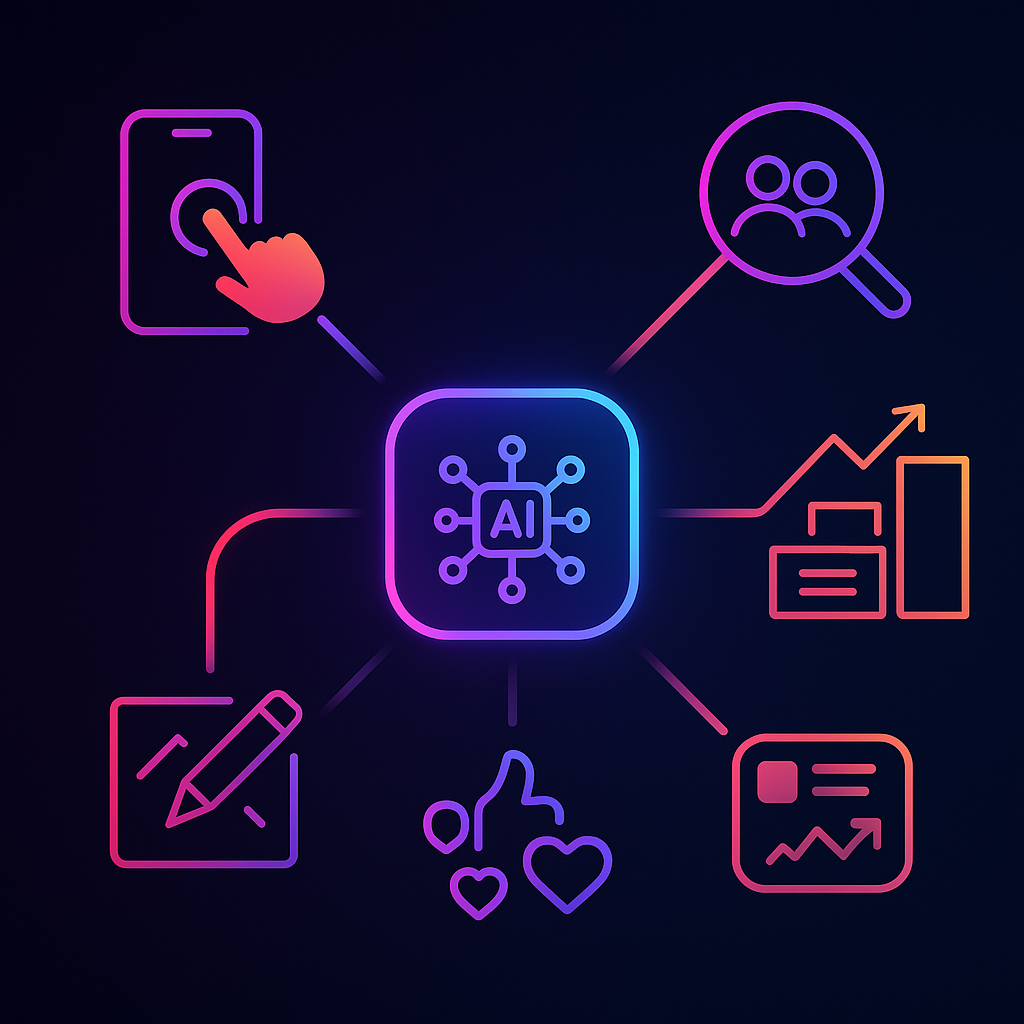
What Core Capabilities Should an AI Social Recruiting Platform Offer?
True AI platforms go beyond point solutions. When evaluating vendors, look for these must-have features:
| Capability | What It Does | Why It Matters |
|---|---|---|
| Social Apply | Lets candidates apply directly from ads in as little as 30 seconds | Lowers cost per application by reducing friction |
| AI-Driven Screening | Shortlists candidates with AI-generated, role-specific questions | No CV upload required; faster pipeline movement |
| Programmatic Ad Optimization | Uses machine learning to target relevant talent with precision | Eliminates wasted spend on unqualified impressions |
| Creative Studio | Provides scroll-stopping ads and templates | Strengthens employer brand while boosting conversions |
| Multi-Platform Activation | Distributes campaigns across Meta, TikTok, LinkedIn, and more | Reaches candidates where they already spend time |
LinkedIn's AI-Assisted Messages offer a useful reference point: recruiters using them see a 40% higher InMail acceptance rate, demonstrating how AI-powered personalization outperforms manual outreach.
Key takeaway: Prioritize platforms that combine automated ad placement, AI screening, and creative tools in a single workflow.
Which Hiring Metrics Really Matter: Quality of Hire or CPA?
Both matter, but they serve different stakeholders. Recruiters track cost per application (CPA) to manage budgets. Executives care about quality of hire because it drives business outcomes.
| Metric | Benchmark Impact | Source |
|---|---|---|
| Cost per Application | 54% reduction with social recruiting | Adway data |
| Time-to-Hire | 59% faster for Adway customers | Adway 2026 Annual Report |
| Quality of Hire | 36% boost reported by TA teams | Adway 2026 Annual Report |
| Conversion Rate | 34% improvement during active Meta campaigns | Recruitics healthcare case study |
A healthcare client operating over 700 care sites saw Arizona locations achieve a 73% increase in application volume alongside a 7% CPA reduction by maintaining an always-on Meta strategy. The lesson: consistency compounds results.
The average HR functional spend sits at 0.76% of revenue, which means every dollar must deliver measurable impact. Platforms that prove ROI with hard numbers earn budget approval faster.
Key takeaway: Track CPA for efficiency, but build your business case around quality of hire and time-to-hire improvements.
Why Is ATS Integration the Hidden Deal-Breaker?
Frictionless data flow determines whether your social recruiting investment scales or stalls. Without seamless ATS integration, you lose source attribution, duplicate data entry, and recruiter trust.
Look for platforms offering:
- 100% source attribution so every qualified applicant is tracked correctly
- One-click applications that feed directly into existing workflows
- Automatic candidate profile creation that extracts work history, skills, and LinkedIn data
Workday, for example, connects hiring to onboarding and workforce planning through its HCM module. If your ATS already sits within a larger suite, confirm the social platform can inject leads without disrupting existing processes.
Poor integration creates a silent killer: recruiters revert to manual workarounds, adoption drops, and you never realize the platform's full value.
Key takeaway: Before signing, map every data handoff from ad click to offer letter. If any step requires manual intervention, negotiate for a custom connector or walk away.
Adway vs. Generalist Talent Suites: Strengths & Gaps
Generalist platforms like Eightfold and hireEZ offer broad capabilities. Specialists like Adway focus on social recruiting depth. The right choice depends on your hiring priorities.
| Vendor | Strength | Consideration |
|---|---|---|
| Adway | Core Leader in 2026 Fosway 9-Grid for Talent Attraction & Engagement; +33% higher quality per hire | Specialist in social; may require complementary ATS |
| Eightfold | Deep-learning AI for skills matching; 4.2 stars on G2 (200 reviews) | Broad talent intelligence; less social-specific |
| hireEZ | Unified data and end-to-end workflows | Strong sourcing; social recruiting is one of many features |
| Paradox | Conversational AI assistant Olivia; 4.7 stars on G2 (39 reviews) | Excels at high-volume screening; less focused on employer brand |
Eightfold uses deep-learning AI to analyze billions of data points and understand skills beyond keyword matching. That capability benefits organizations prioritizing internal mobility alongside external hiring.
Adway's consumption-based pricing appeals to mid-market buyers who want agency-level results without hidden fees. The platform's recognition as a Fosway Core Leader for four consecutive years reflects consistent customer outcomes at enterprise scale.
Key takeaway: If social recruiting is your primary gap, a specialist delivers faster ROI. If you need an all-in-one talent suite, evaluate how deeply each vendor supports social channels.
Build Your Business Case with Real-World Results & Analyst Trust
Executives approve budgets when they see proof. Combine analyst validation with customer results to build a compelling case.
Analyst recognition:
Adway holds a Core Leader position in the 2026 Fosway 9-Grid for Talent Acquisition, specifically in Talent Attraction & Engagement. Fosway is Europe's number one HR industry analyst, and the rating reflects strong market performance and an accelerating trajectory.
Customer outcomes:
Ocab, a Swedish property damage restoration company, struggled to attract sanitation technicians through job boards. After implementing Adway, applications jumped from 5 to over 120 per vacancy, quality of hire improved by 33%, and time-to-hire dropped by 65%.
Nexer Recruit, a Swedish IT staffing firm, saw a 381% increase in applications through automated recruitment marketing. One-third of their tech applications now come through Adway, and time-to-hire shortened by 24%.
Adway customers report a €194 return for every €1 spent, a metric that resonates with finance stakeholders reviewing technology investments.
Key takeaway: Pair analyst credibility with case studies that match your industry or hiring challenge. Numbers beat narratives in budget meetings.
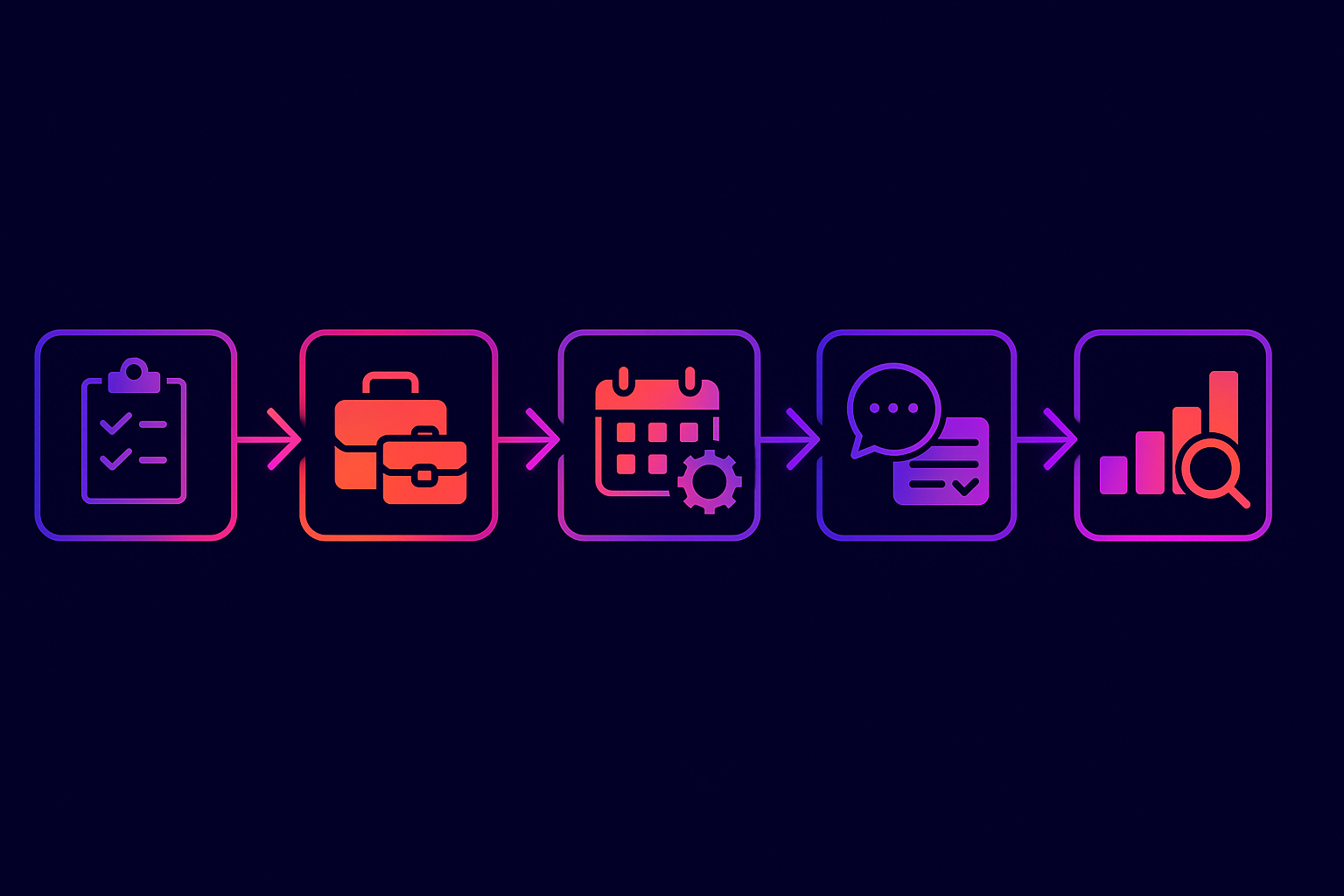
How Do You Run a Proof of Concept Before Signing?
A structured pilot protects your organization from buyer's remorse. Use this checklist:
Define success metrics upfront. Agree on CPA, time-to-hire, and quality of hire targets before the pilot begins.
Select representative roles. Choose positions that reflect your typical hiring volume and difficulty level.
Set a realistic timeline. IDC research notes that 22 TA vendors were analyzed through buyer feedback in recent MarketScape evaluations. Give your pilot enough time to generate statistically meaningful data, typically 60-90 days.
Measure time savings. Raven51 found that campaign setup dropped from 30 minutes to less than a minute with the right automation. Track recruiter hours before and after.
Survey recruiters. LinkedIn's charter customers reported that 66% found AI features saved them time. Internal adoption determines long-term success.
Score vendors consistently. Create a weighted scorecard covering integration, ease of use, candidate quality, and support responsiveness.
As IDC's Zachary Chertok observes, "Talent acquisition priorities are changing, leading to evolving concentrations and points of entry in an increasingly diversifying vendor space." A disciplined POC ensures you select a platform aligned with where the market is heading, not where it was.
Key takeaway: Treat the pilot as a mini-implementation. Document every friction point so contract negotiations address real-world gaps.
Key Takeaways & Next Steps
Choosing the right AI social recruiting platform comes down to five decisions:
Prioritize passive candidate reach. Job boards attract active seekers; social feeds engage the 80% who are not actively looking.
Demand seamless ATS integration. Source attribution and data flow determine whether adoption sticks.
Benchmark on quality of hire, not just CPA. Executives fund initiatives that improve business outcomes.
Validate with analyst recognition. Fosway 9-Grid placements and IDC MarketScape inclusions signal vendor credibility.
Run a structured proof of concept. Pilot results beat sales decks every time.
As one mid-market recruiting manager shared on G2: "Simple, reliable, and efficient. Adway gives us the help we need to succeed. Their experience covers where we lack experience. We see Adway as a partner."
If your TA team is ready to explore how social recruiting technology can improve quality of hire and reduce time-to-fill, Adway offers a starting point worth evaluating.
Frequently Asked Questions
What are the key capabilities of an AI social recruiting platform?
Key capabilities include social apply features, AI-driven screening, programmatic ad optimization, creative studio tools, and multi-platform activation. These features help streamline recruitment processes and enhance candidate engagement.
Why is ATS integration important in social recruiting platforms?
ATS integration ensures seamless data flow, source attribution, and reduces manual data entry. It helps maintain recruiter trust and maximizes the platform's value by integrating smoothly into existing hiring workflows.
How does Adway differentiate itself from generalist talent suites?
Adway specializes in social recruiting, offering deep expertise and faster ROI for companies focused on engaging passive candidates. Its recognition as a Core Leader in the Fosway 9-Grid highlights its effectiveness in talent attraction and engagement.
What metrics should be prioritized when evaluating AI recruiting platforms?
While cost per application (CPA) is important for budget management, quality of hire and time-to-hire are critical metrics that drive business outcomes and should be prioritized when evaluating platforms.
How can a proof of concept help in choosing a recruiting platform?
A proof of concept allows organizations to test the platform's capabilities, measure success metrics like CPA and quality of hire, and ensure it aligns with their hiring needs before making a full commitment.
Sources
- https://adway.ai/attract-1
- https://content.adway.ai/insights/adway-ai-recruitment-social-media-2025
- https://integrations.greenhouse.com/partners/adway-social-recruiting-technology
- https://www.fosway.com
- https://adway.ai/social-audit
- https://adway.ai/why-use-social-recruiting-technology
- https://www.linkedin.com/business/talent/blog/talent-acquisition/early-impact-of-linkedin-ai-tools-for-recruiters
- https://info.recruitics.com/blog/case-study-impact-of-social-on-direct-response-performance
- https://www.gartner.com/en/human-resources
- https://adway.ai/solutions
- https://explore.hireez.com/blog/best-enterprise-recruiting-platforms
- https://www.g2.com
- https://www.idc.com
- https://www.wonderkind.com/success-stories/raven51
- https://adway.ai