
How To Boost Quality of New Hires [2026 Guide]
Discover how to enhance new hire quality in 2026 with AI-driven social recruiting and skills-based selection. Boost your hiring success!
![How To Boost Quality of New Hires [2026 Guide]](https://mcxnxesjearjdhyqqgxy.supabase.co/storage/v1/object/public/concierge-blog-images/e141f51a-d87d-471a-bf89-8dc53292a89b/f7d80b52-dfbb-4262-8625-3b3a760a082d/thumbnails/2301c811-4c21-49e1-bd64-5990ab033066/7ceaa74e-3e62-4026-8be7-6f098e21fb37/thumbnail.png)
How To Boost Quality of New Hires [2026 Guide]
Improving quality of new hires in 2026 requires AI-powered social recruiting, skills-based selection, and automated screening processes. Companies using modern recruitment platforms report 36% boost in quality of hire while reducing time-to-fill by 59%. The shift from volume to value reflects today's reality: 75% of TA leaders now prioritize candidate quality over filling seats quickly.
TLDR
• Quality of hire has become the top priority for 75% of talent acquisition leaders, replacing traditional volume-based metrics
• AI-powered social recruiting delivers 30% more qualified candidates while reducing cost-per-application by 54%
• Skills-based hiring increases quality of hire likelihood by 12% when companies focus on competencies over credentials
• Automation frees up 8,000 hours annually for recruiting teams to focus on candidate fit rather than administrative tasks
• Modern platforms with AI-generated screening questions and one-click social applications capture better candidates directly from their social feeds
• Companies report 36% improvement in hire quality alongside 59% faster time-to-hire when using integrated AI recruiting solutions
Getting the quality of new hires wrong costs more than a bad February 2026. Poor hires drain productivity, spike turnover and erode team morale. In 2026, boosting the quality of new hires depends on data-led sourcing, AI automation and skills-based selection. This guide breaks down the metrics that matter, the headwinds you will face and the practical steps to build a hiring engine that consistently delivers top talent.
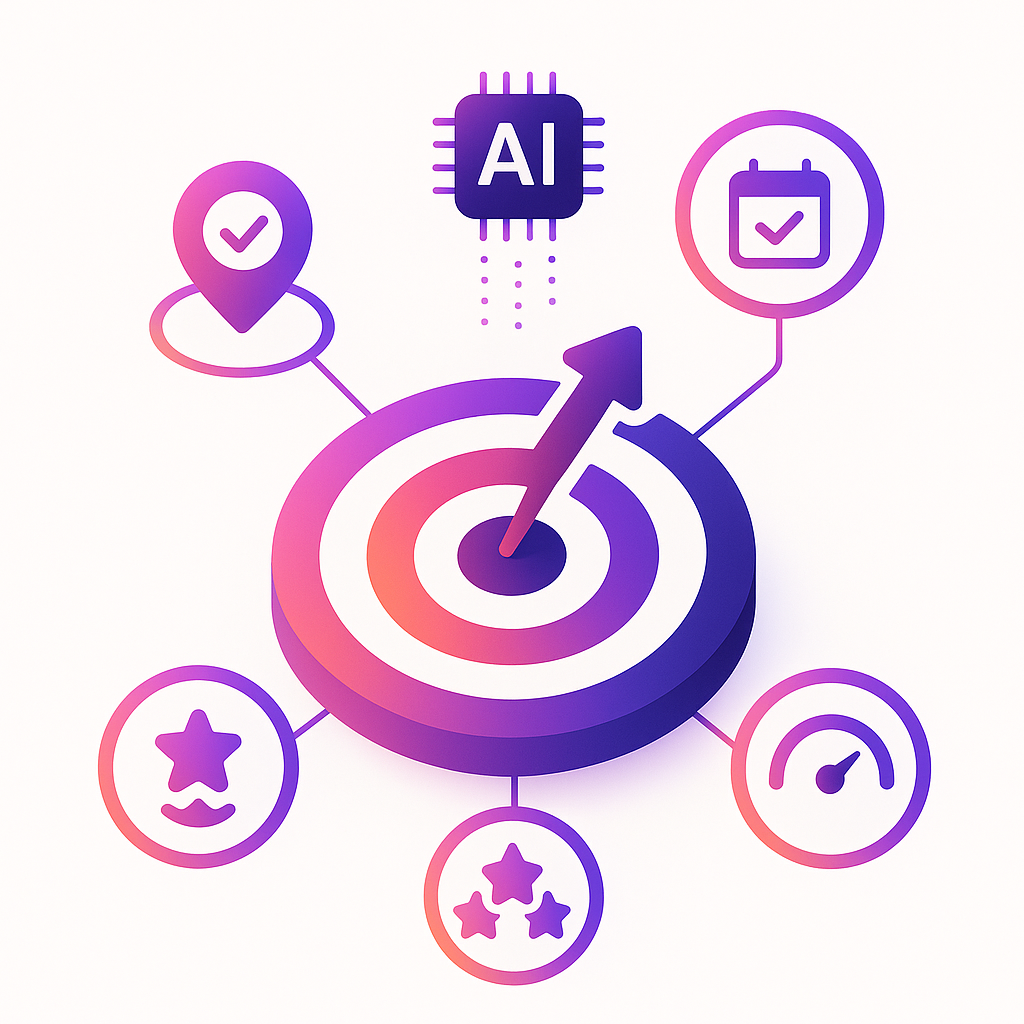
Why Quality of New Hires Tops Every TA Agenda
Talent acquisition leaders have shifted their focus from volume to value. According to Adway, 75% of TA leaders say candidate quality is their top priority. That number reflects a broader market reality: filling seats quickly means nothing if those hires leave within a year or underperform.
LinkedIn's 2025 Future of Recruiting report reinforces this shift. The study found that 89% of TA pros agree measuring quality of hire will become increasingly important. Why the urgency? Because candidate experience now doubles as a brand signal. A single platform built to attract, engage and convert top candidates at speed can transform how teams define success, moving the needle from applications received to hires who deliver.
Key takeaway: Quality of hire is no longer a secondary metric. It sits at the centre of every strategic TA conversation heading into 2026.
What Metrics and Benchmarks Prove Quality of Hire?
Measuring quality of hire starts with looking beyond time-to-fill. The most effective TA teams track post-start indicators that reveal whether a new hire actually performs.
| Metric | What It Measures |
|---|---|
| First-year retention | How many new hires stay past 12 months |
| Ramp-up speed | Time to full productivity |
| Performance ratings | Manager assessments at 90 and 180 days |
| Hiring source effectiveness | Which channels produce top performers |
LinkedIn data shows 61% of TA pros believe AI can help improve how they measure quality of hire. AI connects pre-hire signals with on-the-job outcomes, surfacing patterns humans miss.
Adway's 2026 Annual Report offers concrete benchmarks. Customers using the platform report a 59% reduction in time-to-hire alongside measurable gains in candidate fit. Platforms that deliver 30% more qualified candidates on average give TA teams the data they need to prove ROI to stakeholders.
What 2026 Hiring Headwinds Threaten Quality of New Hires?
TA teams face mounting pressure from multiple directions. Gartner research highlights that recruiting leaders must meet CEO-driven growth targets while overcoming resource constraints and talent shortages. Budget freezes make the challenge worse: 78% of recruiting leaders face stagnant or shrinking budgets, and only 22% have visibility into their hiring needs for the current year.
The skills gap adds another layer of difficulty. According to Deloitte, nearly 40% of skills required on the job are set to change, and 63% of employers already cite the skills gap as their key barrier to transformation.
Candidate experience cannot be ignored either. BCG found that more than half of candidates say they would decline an otherwise attractive offer if they have had some type of negative experience during the recruiting process. A clunky application or slow response time can cost you the best talent before you ever see their CV.
Key takeaway: Budget pressure, skills shortages and candidate expectations create a perfect storm. TA teams that fail to modernise will watch quality of hire slip.
How Does AI-Powered Social Recruiting Lift Quality of New Hires?
AI-powered social recruiting flips the traditional model. Instead of waiting for candidates to find your job board, you meet them where they already spend time.
Adway uses AI-driven social recruiting to target untapped talent pools, boosting quality of hire on social media. The platform lets candidates apply directly from the ad in as little as 30 seconds, lowering cost-per-application by 54%.
LinkedIn's 2025 report confirms the broader trend: TA pros already using generative AI report a 20% reduction in workload on average. That freed-up time goes toward candidate screening and relationship building.
The reach of social channels matters too. Adway's Social Audit data shows 73% of Millennials found their last position through social media. With more than 90% of internet users active on social platforms, employers who ignore these channels miss the largest pool of passive candidates available.
AI Shortlisting & Smart Scorecards
Automated screening removes guesswork from candidate evaluation. Adway's Smart Scorecard uses AI-generated, role-specific screening questions to ensure precision in candidate evaluation. The result: recruiters spend less time on unqualified applicants and more time on people who fit.
Smart Scorecard helps teams automatically shortlist the best candidates, while Smart Profile extracts work history, skills, education and LinkedIn data without requiring a traditional CV upload. As the Greenhouse integration page notes, the platform "shortlists the most relevant candidates with AI-driven screening, no CV upload required."
How to Implement Skills-Based, Candidate-First Hiring
Skills-based hiring means evaluating candidates on what they can do, not where they went to school or how long they stayed in previous roles. LinkedIn defines it as "the practice of hiring based on candidates' skills, rather than their degrees or their job history," and it is becoming an increasingly important priority.
The payoff is real. LinkedIn data shows that 93% of TA pros believe accurately assessing a candidate's skills is crucial for improving quality of hire. Companies with the most skills-based hires are 12% more likely to make a quality hire.
Practical steps to shift toward skills-based hiring:
- Replace degree requirements with skill assessments in job postings
- Use AI tools that match candidates to roles based on verified competencies
- Train hiring managers to evaluate work samples over CV credentials
BCG advises teams to develop a candidate-first mindset. Candidates deserve a positive recruitment experience that is rigorous and transparent. When you lead with skills and respect their time, you attract people who want to prove themselves.
Automate Admin & Free Recruiters to Focus on Fit
Administrative tasks eat into recruiter capacity. Nestlé discovered this firsthand: prior to 2022, global recruiting teams spent over 8,000 hours per month scheduling and rescheduling interviews. After implementing conversational recruiting software, the company now automates nearly 8,000 hours of recruiting work yearly and achieved a 600% increase in interviews scheduled year-over-year.
Mission Cloud offers another example. Using Gem's AI-first recruiting platform, the company made 43 hires in 90 days with just two recruiters. Time-to-fill dropped from 65 days to 57 days.
Tractor Supply Company focused on mobile accessibility. By introducing conversational AI, they achieved a 58% decrease in time to apply and an 80% chat-to-apply conversion rate. Recruiters no longer chase paperwork; they engage candidates.
Key takeaway: Automation does not replace recruiters. It removes friction so they can spend time on the human side of hiring.
Choosing Your Tech Stack: Why Adway Beats Legacy ATS Alone
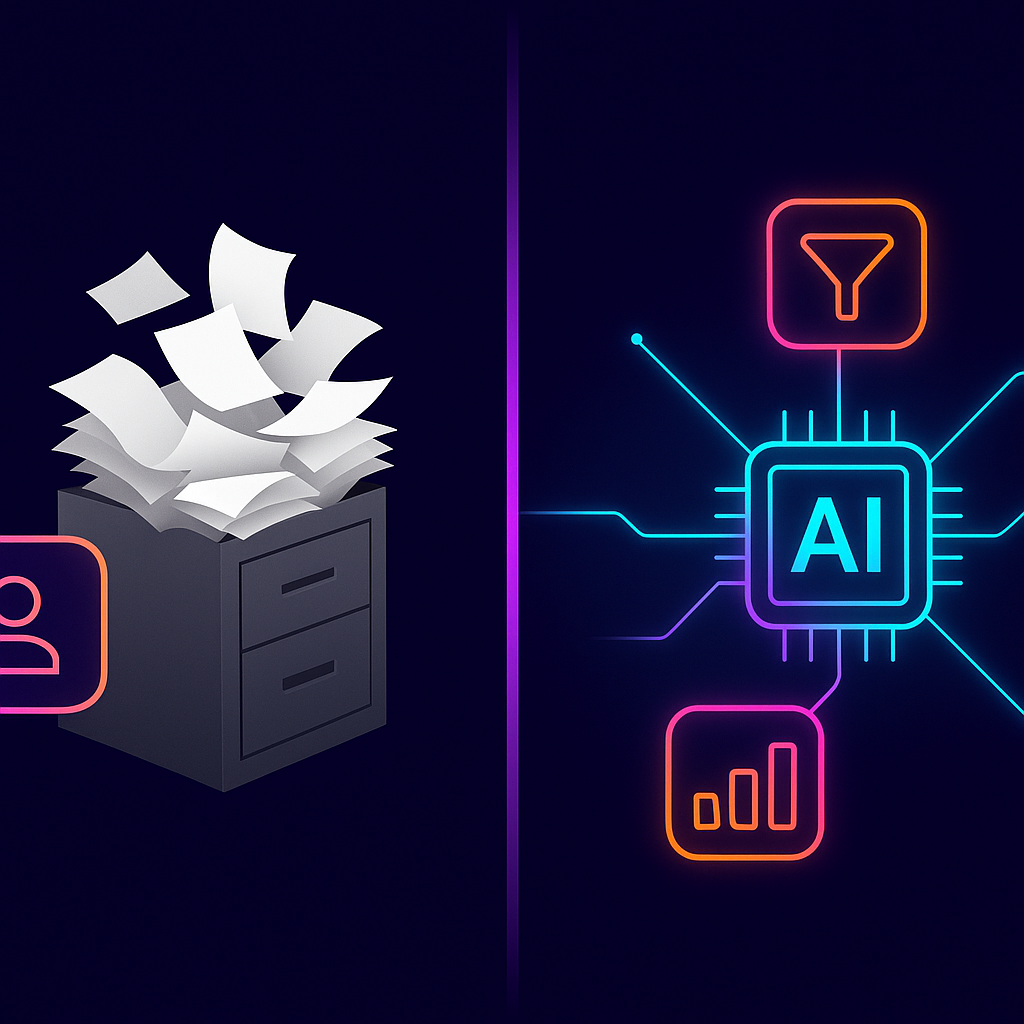
Legacy applicant tracking systems served their purpose. They tracked requisitions and stored candidate files. But as Gartner notes, TA applications have evolved to cover a broader set of activities such as recruitment marketing, candidate relationship management and onboarding.
The problem with ATS-only approaches? Tony Le, Head of Talent Acquisition at Mission Cloud, put it bluntly: "Most ATSs have been a fancy file cabinet, and so eventually the ATS gets devalued."
| Capability | Legacy ATS | Adway |
|---|---|---|
| Job posting | Manual, job-board focused | Automated social distribution |
| Candidate sourcing | Inbound only | AI-targeted passive candidates |
| Screening | Keyword matching | AI scorecards with role-specific questions |
| Integration | Limited | Seamless, friction-free ATS integration |
| Analytics | Basic reports | ROI tracking and source attribution |
Adway offers 100% source attribution, ensuring every qualified applicant is sourced correctly. The platform integrates with existing ATS systems while adding the social recruiting layer that legacy tools lack.
Gartner Peer Insights shows where traditional HCM suites fall short. ADP holds a 4.2 rating with 75% willing to recommend, while Workday scores 4.5 with 83% willing to recommend. Both excel at core HR functions but were not built to run AI-driven social recruiting campaigns at scale.
Adway fills that gap. Recognised as a Core Leader in the 2026 Fosway 9-Grid for Talent Acquisition for four consecutive years, the platform delivers what TA teams need: quality candidates, transparent pricing and seamless workflow integration.
Ready to Boost Quality of New Hires? Start with Adway
The path to better hires runs through smarter sourcing, AI-powered screening and skills-based selection. Adway delivers measurable results: customers report a +36% boost in quality of hire alongside significant reductions in time and cost.
Anita Florén, Head of Recruitment at PEAB, summarised the impact: "Since partnering with Adway, we're attracting more relevant, higher quality candidates. Not just more applicants, but the right ones!"
If your current tech stack leaves you sorting through unqualified applicants, it is time to explore what AI-driven social recruiting can do. Adway connects your employer brand with pre-engaged talent pools, automates the admin work and gives your recruiters the data they need to make confident decisions.
Request a demo to see how Adway can transform your quality of hire in 2026.
Frequently Asked Questions
What is the importance of quality of hire in 2026?
Quality of hire is crucial as it directly impacts productivity, turnover, and team morale. In 2026, it is a top priority for TA leaders, with 75% emphasizing its importance over mere volume of hires.
How can AI improve the quality of new hires?
AI enhances hiring by connecting pre-hire signals with job performance outcomes, automating candidate screening, and targeting untapped talent pools, thus improving candidate fit and reducing time-to-hire.
What metrics are essential for measuring quality of hire?
Key metrics include first-year retention, ramp-up speed, performance ratings, and hiring source effectiveness. These metrics help assess whether new hires perform well and stay with the company.
How does Adway's platform support better hiring outcomes?
Adway's AI-driven social recruiting platform automates job advertising, targets passive candidates, and integrates seamlessly with ATS systems, leading to a 36% boost in quality of hire and reduced hiring costs.
What challenges do TA teams face in improving hire quality?
TA teams face budget constraints, skills shortages, and high candidate expectations. These challenges require modernizing recruitment processes to maintain high-quality hires.
Sources
- https://adway.ai/
- https://lp.adway.ai/ai-social-recruiting-qualified-candidates-reduce-hiring-costs
- https://adway.ai/solutions
- https://www.linkedin.com/business/talent/blog/talent-acquisition/future-of-recruiting-2025
- https://www.gartner.com/en/human-resources/topics/hr-recruiting-strategy
- https://www2.deloitte.com/us/en/blog/human-capital-blog/2025/ai-in-talent-acquisition.html
- https://www.bcg.com/publications/2025/ai-changing-recruitment
- https://integrations.greenhouse.com/partners/adway-social-recruiting-technology
- https://adway.ai/social-audit
- https://business.linkedin.com/talent-solutions/resources/future-of-recruiting
- https://www.paradox.ai/case-studies/nestle
- https://www.gem.com/case-study/mission-cloud
- https://www.paradox.ai/case-studies/tractor-supply-co
- https://www.gartner.com/reviews/market/talent-acquisition-applications