
Gaia vs Adway for Recruiting Agencies
Discover why Adway outperforms Gaia for recruiting agencies with validated metrics and seamless ATS integration.','faq':[{
Gaia vs Adway for Recruiting Agencies
Recruiting agencies using Adway report 59% faster time-to-hire and 36% better quality of hire compared to traditional methods, while Gaia claims 60% faster hiring than job boards without published third-party validation. Adway's consumption-based pricing and Fosway Core Leader status provide transparency and verified performance that agencies need for client ROI conversations.
Key Facts
• Time-to-hire: Adway delivers 59% reduction vs Gaia's unverified 60% claim against job boards
• Quality metrics: Adway shows 36% quality improvement and €194 return per €1 spent; Gaia publishes no audited quality data
• Channel reach: Both platforms cover major social networks; Gaia runs campaigns across 11+ channels including TikTok, Reddit, and Snapchat
• Apply flow: Gaia offers 45-second mobile applications; Adway provides one-click social apply without leaving the feed
• Agency results: ELITS achieved 200% higher fill rate at half the cost with Adway; Nexer Recruit gets one-third of tech applications through the platform
• Validation: Adway holds Fosway Core Leader status for four consecutive years; Gaia lacks independent third-party verification
Recruiting agencies live and die by three numbers: time-to-hire, cost-per-hire, and quality of hire. When budgets tighten and clients demand faster fills, the social recruiting platform you choose becomes a make-or-break decision.
Both Gaia and Adway promise AI-driven recruitment marketing across social channels. Both claim to reach passive candidates. But the hard data tells a different story.
Adway clients report a 59% reduction in time-to-hire and a 36% boost in quality of hire. Those numbers come with independent validation: Adway holds Core Leader status in the 2025 Fosway 9-Grid for Talent Acquisition for the fourth consecutive year.
This comparison breaks down what each platform actually delivers so you can decide with confidence.
Why Do Recruiting Agencies Compare Gaia vs Adway in 2025?
The recruitment marketing landscape has shifted dramatically. With 4.8 billion active social media users globally, agencies that ignore social channels miss most of the talent pool.
Both platforms target this opportunity:
- Gaia positions itself around AI targeting, cross-channel reach, and a 45-second apply flow
- Adway focuses on quality of hire, programmatic automation, and deep ATS integration
The urgency is real. According to Hootsuite data, 84% of organizations now use social media to recruit. Agencies without a scalable social recruiting solution risk losing clients to competitors who can deliver candidates faster and cheaper.
For agency leaders evaluating these platforms, the question is not whether to invest in social recruiting technology. The question is which platform delivers measurable results that justify the spend.
Which Platform Wins on Time-to-Hire, Cost-per-Hire & Quality?
Hard metrics separate marketing claims from real performance. Here is what the data shows:
| Metric | Adway | Gaia |
|---|---|---|
| Time-to-hire reduction | 59% | Claims 60% faster than job boards |
| Quality of hire improvement | +36% | No audited metric published |
| ROI | €194 return per €1 spent | Not disclosed |
| Cost per application | 54% reduction | Claims 2x cheaper than job boards |
| Independent validation | Fosway Core Leader (4 years) | None listed |
Gaia states it helps agencies "hire 2x cheaper and 60% faster than job boards". That comparison sets a low bar. Job boards represent legacy recruiting, not the competitive benchmark agencies need.
Adway's metrics compare against broader recruitment marketing spend, and they carry third-party validation. The Fosway 9-Grid evaluates vendors on performance, potential, presence, total cost of ownership, and trajectory. Achieving Core Leader status four years running requires consistent customer results at enterprise scale.
The ELITS case study illustrates the difference in practice. This Swedish IT consultancy achieved 60% of all commissions filled through Adway social ads while spending zero hours on recruitment marketing.
Key takeaway: Adway publishes independently validated ROI metrics. Gaia's claims lack third-party verification, making direct comparison difficult for procurement teams requiring auditable data.
How Do Gaia and Adway Compare on Targeting, Automation & ATS Flow?
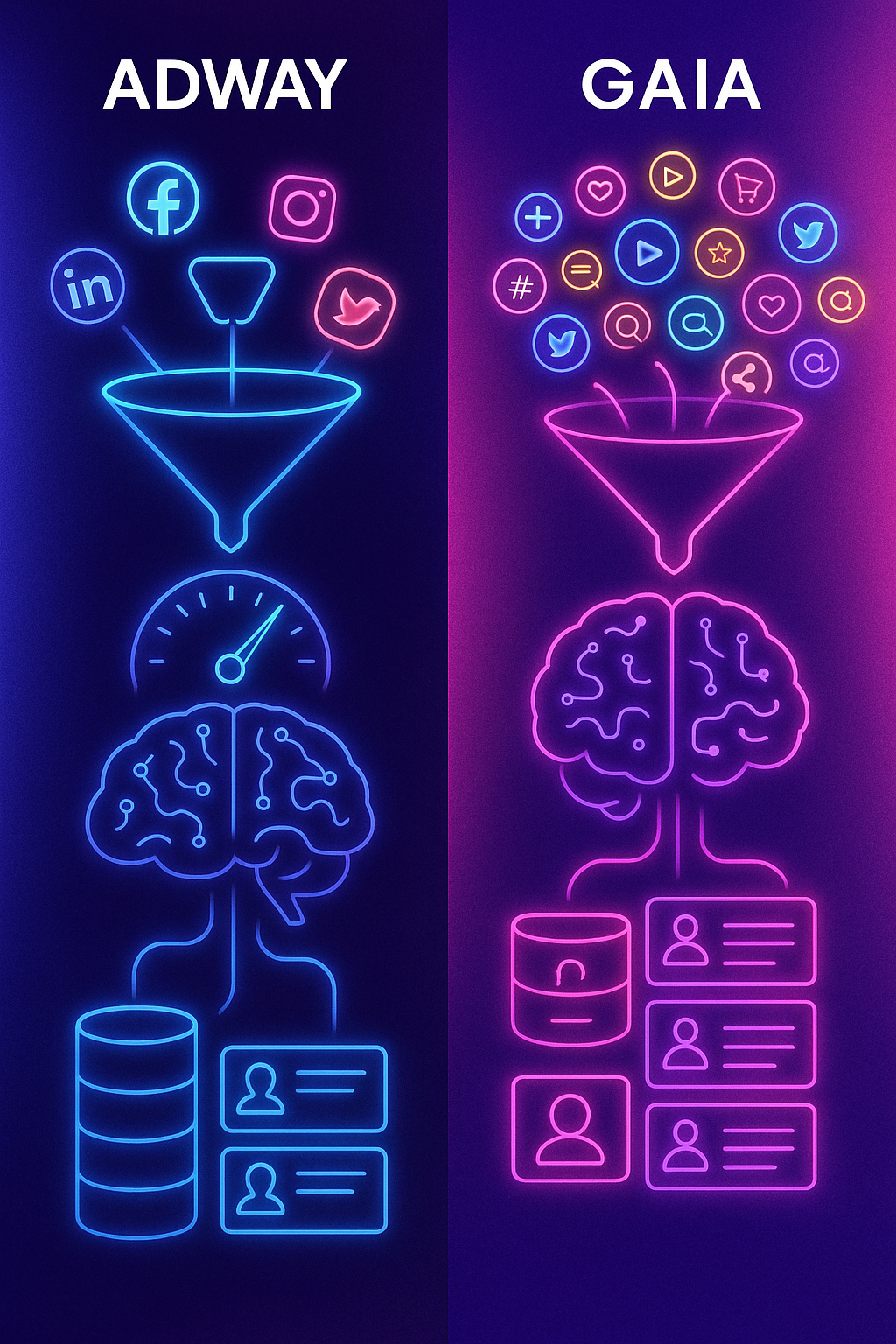
Both platforms use AI to target candidates across social channels. The differences lie in execution depth and integration philosophy.
Channel coverage:
- Gaia runs campaigns across Google Display, Facebook, Instagram, TikTok, Reddit, LinkedIn, YouTube, X, Pinterest and Snapchat
- Adway delivers programmatic campaigns across major social platforms with AI-powered targeting that analyzes real-time behavioral data
AI capabilities:
Gaia claims its AI is trained on 1 billion hiring data points. Adway emphasizes precision targeting with bias-free algorithms designed to ensure fair and diverse hiring.
McKinsey research validates the importance of AI in recruitment. Their analysis reveals the largest value potential for generative AI in HR (about 20%) lies in talent acquisition, recruiting, and onboarding.
Candidate screening:
Adway's platform includes Smart Profile and Smart Scorecards that scan, score, and shortlist candidates automatically. This AI-driven screening ensures only high-potential candidates enter the recruitment pipeline.
Gaia offers smart forms to pre-qualify candidates but does not publish equivalent automated scoring capabilities.
Seamless ATS Integration That Preserves Workflow
For agencies, ATS integration is non-negotiable. Manual data entry kills efficiency and introduces errors.
Adway provides seamless, friction-free ATS integration with one-click applications via social media. Candidates apply without leaving their social feed, and data flows directly into your existing system.
Gartner defines Applicant Tracking Systems as tools that "allow enterprises to streamline the process of managing applications" for job openings by consolidating the hiring workflows.
Gaia advertises 50+ ATS integrations with two-way sync. Adway emphasizes plug-and-play connections that work with your ATS with no dev time required.
The practical difference: Adway's Social Apply feature keeps candidates engaged within their social platform while still delivering complete profiles to your ATS. This mobile-first approach addresses the reality that most candidates browse jobs on phones, not desktops.
What Results Are Agencies Seeing in the Real World?
Case studies reveal how platforms perform under real conditions.
Nexer Recruit (Adway client):
This Swedish recruitment firm specializing in IT talent achieved "381% more applications with Adway automated recruitment marketing," according to their published results. One-third of tech applications now come through Adway, and time to hire shortened by 24% measured conservatively.
As reported by the agency: "1 out of 3 tech applications now come through Adway."
ELITS (Adway client):
The IT consultancy reported a 200% higher fill rate at half the cost after implementing Adway. Applications per vacancy increased 5x.
Linus Berglund, Recruitment Manager at ELITS, described the experience: "As soon as we saw the demo we understood the potential. Adway completely removed the hassle of advertising vacancies, and allowed us to work strategically with branding campaigns. We now have always-on advertising with engagement metrics off the charts, and our talent pipeline is constantly filled."
Hampshire & Isle of Wight Constabulary (Gaia client):
Gaia reports a 179% surge in police officer applications and a 70% increase in detective applications, alongside diversity gains with 60% of applicants identifying as female.
Both platforms deliver results. The difference lies in the depth of agency-specific case studies. Adway publishes more detailed metrics from recruiting firms like Nexer Recruit, while Gaia's case studies focus primarily on in-house talent acquisition teams.
How Transparent Is the Pricing Model - and What's the Real Cost?
Pricing transparency matters for agency budgeting and client proposals.
Gaia's approach:
The Gaia pricing page states: "We know you came here for pricing. And we know how important pricing it is" in your recruitment partner evaluation process. But instead of publishing rates, Gaia directs visitors to book a demo for customized quotes.
This approach makes budget forecasting difficult. Agencies cannot model costs without engaging in a sales conversation first.
Adway's approach:
Adway operates on a consumption-based pricing model. This structure means you pay for what you use rather than committing to fixed seats or packages.
As industry analysts note, one big advantage of usage-based pricing is that "you pay only for what you use".
Market context:
Appcast's 2025 Recruitment Marketing Benchmark Report analyzed 379 million job ad clicks and over 30 million applies. Their data shows social media CPCs running nearly 50% cheaper than job boards ($0.49 vs. $1.00).
This benchmark gives agencies a reference point. If your current cost-per-click exceeds these figures, either platform should deliver savings. The question becomes which platform provides better transparency into ongoing costs.
Adway's usage-based model aligns spend with actual campaign activity. For agencies with fluctuating hiring volumes across clients, this flexibility prevents paying for unused capacity.
Does Onboarding and Support Slow You Down?
Implementation speed affects time-to-value. A platform that takes months to deploy delays the results you promised clients.
Adway support:
Daniel S., Manager Nordic Recruitment and Employer Branding at Sandvik, shared on G2: "The team at Adway! Really professional in every detail. We see Adway as a partner and that's the way we like to cooperate."
This partnership approach matters for agencies. When client deadlines loom, responsive support prevents missed commitments.
Gaia support:
Gaia emphasizes seamless integration capabilities that eliminate manual data entry and enable swift campaign deployment. Their platform promises time savings through automation.
Both vendors position themselves as reducing administrative burden. The difference appears in the partnership model. Adway clients consistently mention the advisory relationship alongside the technology, while Gaia emphasizes the platform's automation capabilities.
Time to hire impact:
Nexer Recruit reported time to hire shortened by 24% using Adway. That reduction came partly from platform performance and partly from the strategic guidance the Adway team provided.
For agencies evaluating support, ask both vendors for customer references from recruiting firms specifically. In-house talent acquisition support needs differ from agency requirements.
Decision Checklist for Agency Leaders
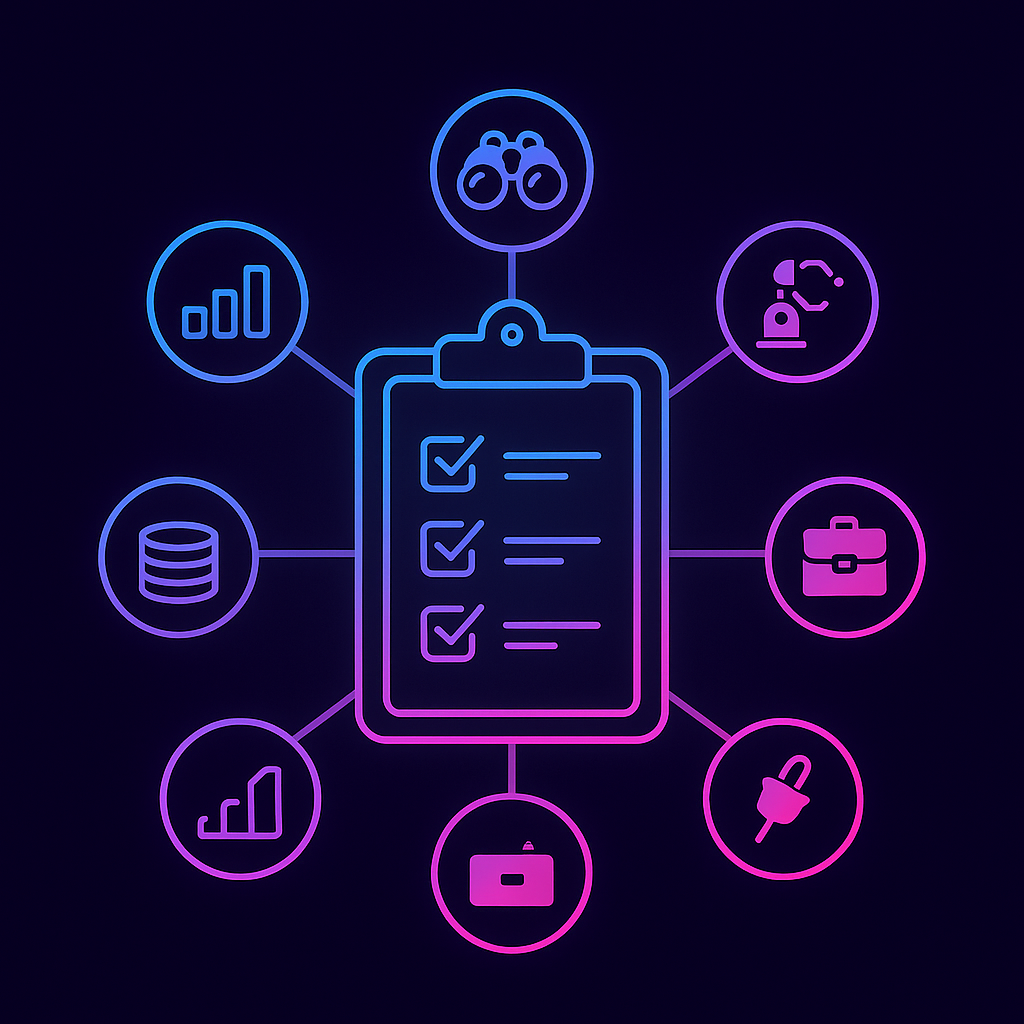
Before committing to either platform, validate these criteria:
1. Quality of hire measurement
LinkedIn's 2025 Future of Recruiting report found 89% of TA pros agree it will become increasingly important to measure quality of hire. Ask each vendor how their platform tracks and reports this metric.
- Does the platform provide quality scoring before candidates reach your ATS?
- Can you demonstrate quality improvements to clients with hard data?
2. Passive candidate reach
Gaia research indicates 80% of all talent is interested in a new opportunity but not actively looking. Both platforms claim to reach passive candidates. Verify:
- What percentage of candidates sourced were not actively job searching?
- How does targeting differ from standard job board advertising?
3. Automation depth
McKinsey predicts AI will reduce time spent on administrative work by 60-70%. Evaluate:
- How much manual work does each platform eliminate?
- What tasks still require human intervention?
4. ATS compatibility
Confirm integration with your specific ATS before signing. Pre-built integrations save weeks of development time.
5. Pricing predictability
For agency budgeting, request:
- Sample pricing scenarios based on your typical campaign volumes
- Clear definitions of what triggers charges
- Comparison to your current cost-per-hire
6. Agency-specific references
Ask for case studies from recruiting agencies, not just in-house teams. The use cases differ significantly.
Key Takeaways: Why Adway Wins for Agencies
Both Gaia and Adway offer legitimate social recruiting capabilities. For recruiting agencies specifically, Adway delivers advantages that matter:
Validated performance:
Adway's Core Leader status in the 2025 Fosway 9-Grid provides independent verification of platform performance. This recognition reflects strong market and customer performance at enterprise scale.
Measurable outcomes:
Published metrics include 59% time-to-hire reduction, 36% quality of hire improvement, and €194 return per €1 spent. These figures give agencies concrete ROI projections for client conversations.
Agency success stories:
ELITS achieved "always-on advertising with engagement metrics off the charts, and our talent pipeline is constantly filled." Nexer Recruit sources one-third of tech applications through Adway. These agency-specific results demonstrate the platform works for firms like yours.
Transparent pricing:
Consumption-based pricing aligns costs with actual usage, preventing overpayment during slow periods.
Gaia offers competitive features, particularly for organizations prioritizing the fastest possible apply flow. But for agencies measured on ROI, quality metrics, and client retention, Adway's combination of validated results and partnership support makes it the stronger choice.
Ready to see how Adway performs for your agency? Request a demo to review your specific use case and projected outcomes.
Frequently Asked Questions
What are the key differences between Gaia and Adway for recruiting agencies?
Adway offers validated performance metrics, seamless ATS integration, and a consumption-based pricing model, while Gaia focuses on AI targeting and fast apply flows without third-party validation.
How does Adway improve time-to-hire and quality of hire?
Adway clients report a 59% reduction in time-to-hire and a 36% boost in quality of hire, supported by independent validation from the Fosway 9-Grid.
What is the pricing model for Adway?
Adway uses a consumption-based pricing model, allowing agencies to pay based on actual usage, which provides flexibility and cost efficiency compared to fixed pricing models.
How does Adway integrate with ATS systems?
Adway offers seamless ATS integration with plug-and-play connections, allowing candidate data to flow directly into existing systems without additional development time.
What results have agencies seen using Adway?
Agencies like Nexer Recruit and ELITS have reported significant improvements in application rates and cost efficiency, with Nexer achieving a 381% increase in applications.
Sources
- https://adway.ai/attract-1
- https://www.iamgaia.com/gaia-vs-competitors
- https://lp.adway.ai/case-elits-adway-tech-talent-sourcing
- https://www.fosway.com
- https://adway.ai/insights/adway-ai-recruitment-social-media-2025
- https://www.iamgaia.com/
- https://www.iamgaia.com/resources/gaia-vs-adzuna-recruitment-marketing-platform-performance-review
- https://adway.ai/why-use-social-recruiting-technology
- https://www.mckinsey.com/capabilities/people-and-organizational-performance/our-insights/the-organization-blog/four-ways-to-start-using-generative-ai-in-hr
- https://adway.ai/ats-application-experience
- https://www.gartner.com/reviews/market/applicant-tracking-systems
- https://adway.ai
- https://www.iamgaia.com/case-studies
- https://www.iamgaia.com/pricing
- https://www.gartner.com/en/finance/trends/usage-based-pricing-guide
- https://www.appcast.io
- https://www.iamgaia.com/agencies
- https://business.linkedin.com/talent-solutions/resources/future-of-recruiting
- https://www.iamgaia.com/resources/the-power-of-programmatic-job-advertising