
AI Recruiting Software vs Traditional ATS: What Works in 2026
Explore how AI recruiting software outperforms traditional ATS in 2026, enhancing speed, quality, and cost efficiency in hiring.
AI Recruiting Software vs Traditional ATS: What Works in 2026
AI recruiting software delivers 26-52% faster hiring times compared to traditional ATS platforms, while reducing costs per application by up to 54%. Companies using AI hire 26% faster than those relying on traditional methods, with some HR teams reporting 52% faster hiring through automation and intelligent screening.
Key Facts
• Traditional ATS adoption remains high at 78%, but only 43% of HR professionals rate their technology stack as effective
• AI-enabled recruiting cuts median time-to-hire from 38 days by 26% or more, with some organizations saving 1,695 hours annually
• 70% of companies experimenting with AI deploy it within HR functions, with 92% reporting measurable benefits
• Social recruiting through AI reaches both active and passive candidates, expanding talent pools by up to 6.1x globally
• Quality of hire improves by 33-36% when AI-powered screening automatically filters 60% of unfit candidates
• ROI metrics show organizations achieving €194 return for every €1 spent on AI recruiting platforms
AI recruiting software is transforming how organizations find and hire talent in 2026, leaving traditional applicant tracking systems struggling to keep pace. While ATS platforms remain ubiquitous, with 78% adoption rates, the gap between what these legacy tools deliver and what modern hiring demands has never been wider.
This comparison examines why traditional ATS limitations are costing organizations top candidates and how AI automation offers measurable advantages in speed, quality, and cost efficiency.
How Did Recruiting Tech Evolve from ATS to AI by 2026?
The recruitment technology landscape has undergone fundamental shifts. Traditional applicant tracking systems emerged as digital filing cabinets, designed to store resumes and track workflow stages. While effective for their original purpose, these systems were never built to improve outcomes.
"Artificial intelligence (AI) is increasingly used in recruitment processes to enhance efficiency and improve hiring decisions," notes a comprehensive review from Springer Nature. This marks a departure from passive record-keeping toward active talent optimization.
The evolution accelerated when major job platforms launched AI tools to help recruiters find and screen candidates. According to BCG's 2024 survey, if a company experiments with AI or GenAI, 70% do so within HR. The results speak for themselves: 92% report benefits, with more than 10% achieving productivity gains exceeding 30%.
Meanwhile, 26% of HR leaders have already begun implementing an AI-first operating model. The share actively planning or deploying GenAI jumped from 19% in June 2023 to 61% by January 2025, signaling that AI recruiting software has moved from experimentation to essential infrastructure.
Why Do Traditional ATS Struggle in a Candidate-Led Market?
Despite widespread investment in recruitment technology, only 43% of HR professionals rate their TA technology stack as "good" or "excellent". This disconnect reveals fundamental limitations in how traditional systems handle modern hiring challenges.
Complex Application Processes Drive Candidates Away
"Sixty percent of job seekers said they have begun an online application, but ultimately didn't finish it due to how long and complex it was," according to CareerBuilder research. When nearly 90% of job seekers use mobile for job activities, yet 46% of HR professionals don't offer mobile ATS access, the mismatch becomes costly.
Passive Candidate Blind Spots
Traditional systems wait for candidates to apply. But with 70% of the global workforce classified as passive talent, ATS platforms miss the majority of potential hires. These candidates aren't browsing job boards; they're scrolling social feeds and open to opportunities if approached correctly.
Limited Re-engagement Capabilities
More than one-third of HR professionals don't re-engage candidates who weren't offered a role. With only 35% of HR leaders confident their technology approach achieves business objectives, organizations lose qualified talent simply because legacy tools lack nurturing functionality.
Key takeaway: Traditional ATS platforms create friction at every stage where candidates expect seamless, mobile-first experiences.
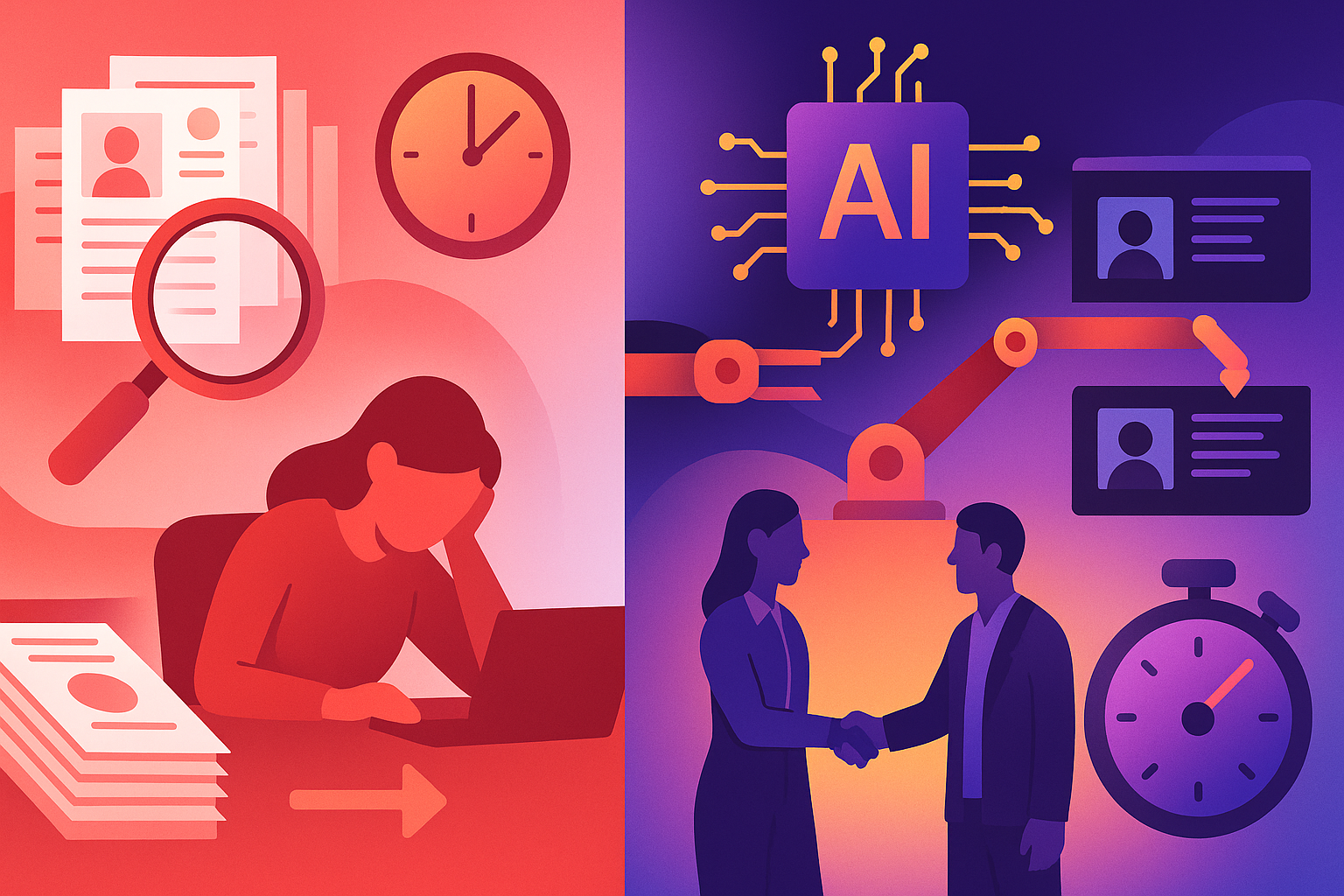
What Advantages Does Modern AI Recruiting Software Offer?
AI recruiting platforms address ATS limitations through automation, predictive analytics, and expanded reach. The impact is measurable: companies using AI hire 26% faster than those relying on traditional methods alone.
Automated Screening and Matching
AI-powered skills assessments help hiring teams identify top candidates backed by real data, verifying capabilities and making decisions based on merit rather than polished CVs. HR professionals who use AI reported hiring 52% faster, with some organizations saving 1,695 hours annually through automation.
Intelligent Candidate Engagement
"The opportunity is real and exciting, especially when it comes to freeing up recruiters to spend more time on relationship building and widening talent pools," says Julie Bedard, managing director at BCG. AI handles administrative tasks like scheduling interviews and screening applications, allowing recruiters to focus on strategic work.
Predictive Quality of Hire
Quality of hire remains one of the hardest metrics to achieve consistently, especially with large candidate pools and time pressure. AI addresses this by matching candidates' skills to roles more effectively, with some platforms automatically filtering 60% of candidates who aren't the right fit.
Reaching Passive Talent on Social Platforms
Social recruiting delivers distinct advantages over traditional job board approaches:
- Social recruiting reaches both active and passive candidates, while job boards serve only active seekers
- Social recruiting delivers higher quality, more informed, culture-fit candidates than job boards
- When recruiters personalize InMail messages, acceptance rates increase by 40%
- 94% of employers using job boards also use social media, citing it as their second most-used hiring resource
Platforms like Adway's AI-driven social recruiting technology help enterprises target untapped talent pools on social media, with results including 54% lower cost-per-application and 33% higher quality per hire.
Speed, Quality & ROI: The Numbers Behind AI Recruiting
The performance gap between AI-enabled and traditional recruitment is substantial and measurable.
| Metric | Traditional Approach | AI-Enabled Results |
|---|---|---|
| Time to hire | 38 days global median | 26% faster with AI |
| Screening efficiency | Manual review | 60% unfit candidates filtered automatically |
| Recruiter time saved | Limited automation | 1,695 hours per year |
| Time-to-hire improvement | Baseline | 52% reduction reported |
These efficiency gains translate directly to competitive advantage. When more than half of candidates would decline an attractive offer after a negative recruiting experience, speed and seamlessness become differentiators.
Apoteket, Sweden's leading pharmacy chain, illustrates the transformation possible when combining modern ATS with AI-powered social recruiting. The organization reduced time to attract from 32 to 12 days and increased applications per vacancy from 5 to 23 by centralizing processes and leveraging data-driven targeting.
How Does Responsible AI Keep You Compliant in 2026?
With nearly 90% of companies now using some form of AI in hiring, compliance frameworks have become essential. The regulatory environment is evolving rapidly, with new requirements shaping how organizations can deploy these tools.
The EU AI Act Framework
The AI Act, provisionally agreed in December 2023, represents the world's first comprehensive law on artificial intelligence. The EU's AI Office, employing more than 140 staff, ensures coherent implementation across member states.
Seven Requirements for Trustworthy AI
The EU High-Level Expert Group on AI established seven key requirements that AI systems should meet:
- Human agency and oversight
- Technical robustness and safety
- Privacy and data governance
- Transparency
- Diversity, non-discrimination, and fairness
- Societal and environmental wellbeing
- Accountability
Skills-Based Hiring Reduces Bias
96% of companies now use skills-based hiring in some capacity, with more than half applying it "always" or "most of the time." This approach expands talent pools while reducing reliance on credentials that may introduce bias. According to LinkedIn research, skills-based approaches could expand talent pools by 6.1x globally.
Gartner projects that by 2025, 60% of enterprise organizations will adopt a responsible AI framework for their HR technology, achieving greater employee experience and organizational trust.
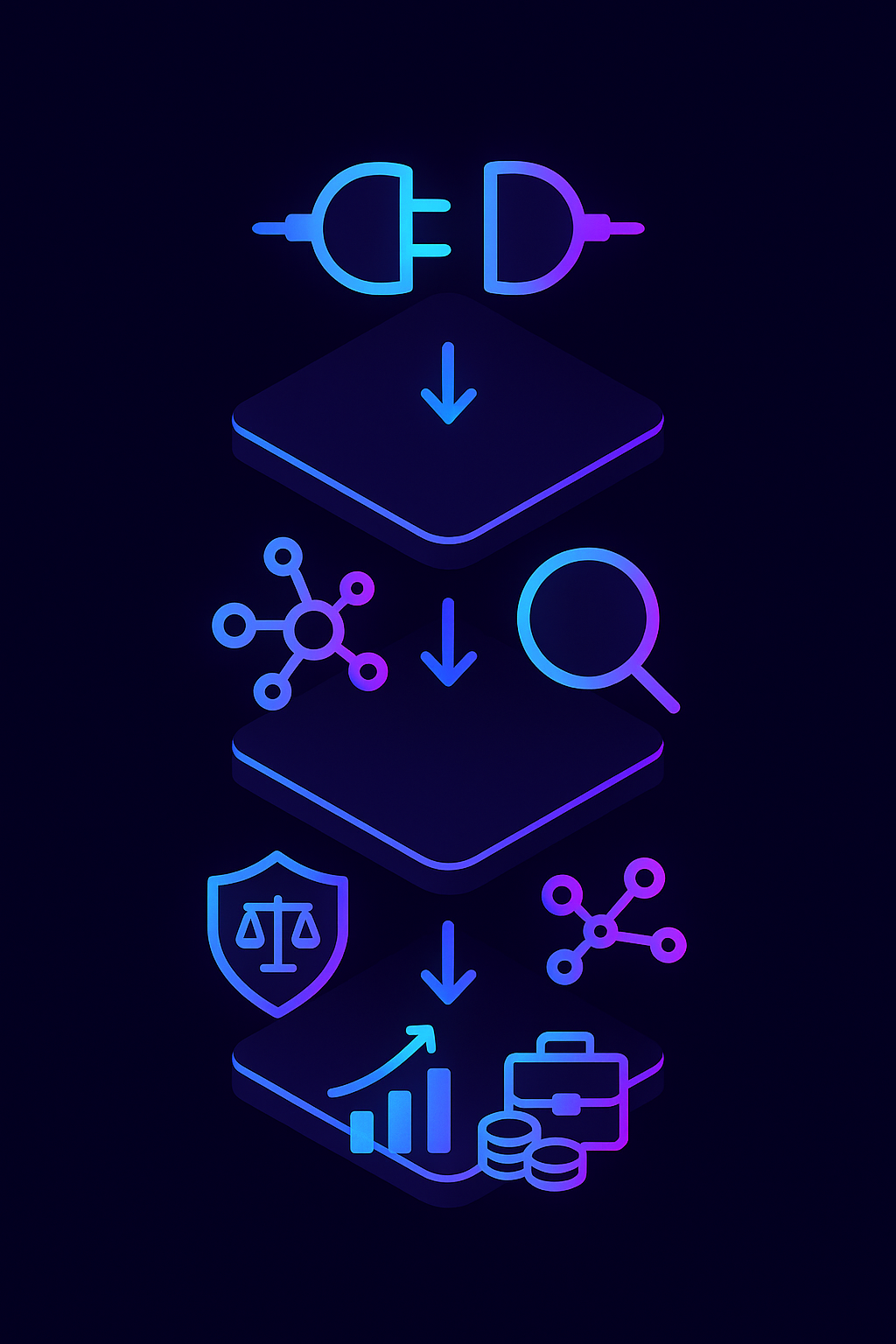
Decision Checklist: Picking the Best Platform for 2026 and Beyond
Selecting the right talent acquisition technology requires evaluating both current capabilities and future readiness. Use this framework to assess platforms:
Integration and Compatibility
- Does the platform integrate with your existing ATS and CRM?
- Can it connect to major social channels (Facebook, Instagram, LinkedIn, TikTok)?
- Does it offer unified API access to normalize data across platforms?
AI Capabilities
- Does the system provide skills-based matching rather than keyword filtering?
- Can it identify and engage passive candidates proactively?
- Does it offer AI-assisted screening with transparent scoring?
Compliance and Governance
- Does the vendor provide bias audit documentation?
- Is the platform aligned with emerging regulations (EU AI Act, EEOC guidelines)?
- Can you explain how hiring decisions are made?
Measurable Outcomes
- Does the platform track source-of-hire attribution?
- Can you measure quality of hire, not just time to fill?
- Does it provide real-time ROI visibility?
The share of HR leaders actively deploying GenAI jumped from 19% to 61% in 18 months. Platforms that combine traditional ATS functionality with AI-powered automation, such as Lever's ATS/CRM integration or Greenhouse's structured approach, position organizations for this transition.
Real-World Proof: How Adway Clients Cut Time-to-Hire
Theory meets practice in documented client outcomes from organizations using AI-powered social recruiting.
Ocab: From Struggling to Scaling
Ocab, a Swedish property damage restoration company, faced challenges attracting quality candidates for sanitation technician roles. Traditional job boards delivered few applications and mismatched hires.
After implementing Adway's social recruiting platform:
- "Applications for sanitation technician roles jumped from 5 to 120+"
- "They got 33% more quality hires with Adway compared to before"
- "Adway's automation saved hours of manual tasks and reduced time-to-attract from 34 days to just 12"
The result: 65% faster time-to-hire and 24x more quality applications.
Nexer Recruit: Data-Driven Results
Nexer Recruit, specializing in IT and tech talent, partnered with Adway to reach candidates through social media more effectively. The outcome: "381% more applications with Adway automated recruitment marketing" and a 24% reduction in time to hire, with one-third of tech applications now sourced through the platform.
Platform Performance Metrics
Across Adway's customer base, the platform demonstrates consistent results:
- Time cut for hiring by 59%
- Boosted quality of hire by +36%
- Achieved €194 return for every €1 spent
- Reduced cost per application by 54%
Adway has been recognized as a Core Leader in the 2025 Fosway 9-Grid for Talent Acquisition for four consecutive years, validating its position among enterprise-grade solutions.
Conclusion: Future-Proof Your Hiring Stack Now
The evidence is clear: traditional ATS platforms alone cannot meet 2026 hiring demands. With only 23% of organizations willing to rehire 76-100% of employees hired in the past year, quality of hire remains a critical gap.
AI recruiting software addresses this gap by:
- Reaching the 70% of talent that passive candidates represent
- Reducing time-to-hire by 26% or more
- Delivering measurable ROI through automation and targeting
- Supporting compliance through transparent, skills-based matching
Organizations ready to move beyond ATS limitations should evaluate platforms that combine seamless integration with AI-powered social recruiting. Adway offers exactly this combination, connecting with any ATS while automating programmatic job advertising across major social channels.
The gap between traditional and AI-enabled recruiting will only widen. The question isn't whether to adopt AI recruiting software, but how quickly your organization can make the transition.
Frequently Asked Questions
What are the main limitations of traditional ATS in 2026?
Traditional ATS struggle with complex application processes, passive candidate engagement, and limited re-engagement capabilities, leading to missed opportunities and inefficiencies in hiring.
How does AI recruiting software improve hiring processes?
AI recruiting software automates screening, enhances candidate engagement, and uses predictive analytics to improve quality of hire, reducing time-to-hire by 26% or more.
What advantages does AI offer over traditional recruitment methods?
AI offers faster hiring, better candidate matching, and the ability to reach passive talent through social platforms, resulting in higher quality hires and reduced costs.
How does Adway's platform enhance recruitment?
Adway's AI-driven social recruiting platform automates job advertising across social channels, improving candidate reach and quality while integrating seamlessly with existing ATS systems.
What compliance measures are necessary for AI recruiting in 2026?
Organizations must adhere to frameworks like the EU AI Act, ensuring AI systems meet requirements for transparency, fairness, and accountability in hiring processes.
Sources
- https://ta.smartrecruiters.com/rs/664-NIC-529/images/Recruitment-Benchmarks-2025-Report.pdf?version=0
- https://www.hirevue.com/blog/hiring/ai-impact-recruitment-metrics
- https://www.bcg.com/publications/2025/ai-changing-recruitment
- https://eightfold.ai/learn/hr-coms-future-of-recruitment-technologies-2025-26/
- https://link.springer.com/article/10.1007/s44282-025-00246-w
- https://www.gartner.com/en/human-resources
- https://www.prnewswire.com/news-releases/careerbuilder-study-reveals-5-technology-related-barriers-that-are-killing-your-candidate-experience-278490241.html
- https://hiring.monster.com/resources/recruiting-strategies/talent-acquisition/mobile-job-apply/
- https://fetcher.ai/guides/ultimate-guide-recruiting-passive-talent
- https://www.careerarc.com/social-recruiting/social-recruiting-vs-job-boards/
- https://www.linkedin.com/business/talent/blog/talent-acquisition/new-ai-tools-let-you-identify-message-candidates-faster
- https://integrations.greenhouse.com/partners/adway-social-recruiting-technology
- https://adway.ai
- https://hbr.org/2025/12/new-research-on-ai-and-fairness-in-hiring
- https://digital-strategy.ec.europa.eu/en/policies/european-approach-artificial-intelligence
- https://digital-strategy.ec.europa.eu/en/policies/expert-group-ai
- https://digital-strategy.ec.europa.eu/en/library/ethics-guidelines-trustworthy-ai
- https://blog.workday.com/en-us/what-skills-based-hiring-means-in-the-age-of-ai.html
- https://economicgraph.linkedin.com/content/dam/me/economicgraph/en-us/PDF/skills-based-hiring-march-2025.pdf
- https://www.gartner.com/en/newsroom/press-releases
- https://docs.unified.to/ats/overview
- https://theundercoverrecruiter.com/greenhouse-vs-lever-vs-workable-vs-bullhorn/
- https://intercode.com/cases/adway-ai-hr-tech-saas-app
- https://www.fosway.com